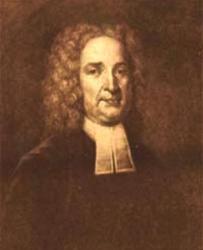
Francis Atterbury
 Great Britain
Biography of Francis Atterbury
Francis Atterbury, an English writer, politician, and bishop, was known for his eloquence as a preacher and his wit. During a certain period of his life, he received many honors and privileges. However, he lost his positions as a Doctor of Divinity and a Dean at Carlisle Cathedral. Why did Atterbury lose all his titles, end up in the Tower of London, and eventually get exiled from England?

Early Life and Education
Francis Atterbury was born on March 6, 1663, in Milton Keynes, Buckinghamshire. His father was a rector in the town. After completing his studies at Westminster School and Christ Church College, Oxford University, Atterbury began teaching. In 1682, he translated the poem "Absalom and Achitophel" into English, and his translation was a great success.
Career and Achievements
After the Glorious Revolution, Atterbury easily swore allegiance to the new government. He took holy orders in 1687 and occasionally preached in London. His eloquence helped him become one of the royal chaplains. He resided in Oxford, where he served as the chief advisor and assistant to theologian and philosopher Henry Aldrich.
When the Church of England split between the high and low church, the majority of the clergy joined the high church, and most of King William's bishops became supporters of tolerance. In 1701, at a general assembly of the Anglican clergy, Atterbury engaged in spirited debates and then published several treatises. He became the Archdeacon of Totnes and received a prebend from Exeter Cathedral. The Lower House of Convocation was grateful to Atterbury for his service, and Oxford University awarded him a Doctor of Divinity degree. In 1704, shortly after Queen Anne's accession to the throne, Atterbury became the Dean of Carlisle Cathedral.
In 1711, Atterbury was appointed the chairman of the Lower House of Convocation. Later, the queen chose him as her chief advisor on church matters and made him the warden of Christ Church following the death of his old friend and patron, Henry Aldrich.
Exile and Later Life
After Queen Anne's death, Atterbury tried to gain the favor of the royal family, but his flattery was met with cold disdain. When the rebellion broke out in 1715, he refused to sign a document pledging loyalty to the Protestants, and in 1721, he was arrested along with other dissidents. Atterbury spent several months in the Tower of London in 1722. The following year, his involvement in a plot against George I was proven, leading to the revocation of all his ecclesiastical titles and his exile.
In exile, Francis Atterbury said farewell to all his loved ones with dignity and tenderness. He briefly stayed in Brussels before arriving in Paris, where he became an influential figure among the Jacobite exiles. In 1728, he left Paris and settled in Montpellier, renouncing politics and dedicating himself entirely to literature.
In the sixth year of his exile, Atterbury, severely ill, wished to meet his daughter, Maurice, who was also very weak. He met her in Toulouse, conducted the sacrament of confirmation, and Maurice passed away on the same day. After recovering from the loss of his daughter, Francis returned to Paris. He died on February 22, 1732. His body was brought back to England and buried in Westminster Abbey.
Very little information is available about Francis Atterbury's wife, Catherine Osborne. However, it is known that he had a romantic relationship with her daughter. Atterbury maintained friendly relations with Jonathan Swift, John Arbuthnot, and John Gay.