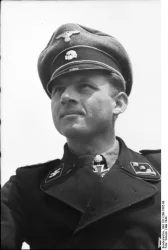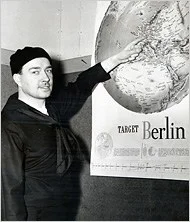
William Patrick Hitler
William Patrick Hitler, later known as William Patrick Stuart-Houston, was a British-born American who became known as the half-nephew of Adolf Hitler. Born in Liverpool to Alois Hitler Jr. and Bridget Dowling, he spent time in both Britain and Germany before settling in the United States. During the Second World War, he served in the U.S. Navy against the regime led by his uncle, then changed his name and sought a private life.
A childhood between Britain and Germany
William was born on 12 March 1911 in Liverpool. His father, Alois, was Adolf Hitler’s half-brother, and his mother was Irish-born Bridget Dowling. The family later lived in Germany, where William tried to establish himself as a young adult as his uncle rose to power. Accounts of his life in that period describe a difficult relationship and an attempt to benefit from his famous connection, but details vary among later retellings.
William and his mother returned to Britain before the outbreak of war. They moved to the United States in 1939, where his surname attracted public attention. He spoke and wrote about his relationship to the German dictator, presenting himself as a critic of Nazism. The family remained in America as war divided the countries in which he had lived.
U.S. Navy service
After the United States entered the war, William sought to join the armed forces. He was accepted into the U.S. Navy in 1944 and served as a pharmacist’s mate, a medical support role later known as hospital corpsman. He served until 1947 and received the Purple Heart after being wounded.
His service made him an unusual figure: a member of Hitler’s extended family who served in the American military fighting Nazi Germany. The Navy’s enlistment of a man bearing the Hitler name attracted national press attention, though he later withdrew from the spotlight.
A new name and private life
After leaving the Navy, he became a U.S. citizen and adopted the surname Stuart-Houston. He married Phyllis Jean-Jacques, and the couple settled on Long Island, New York, where he ran a blood-analysis laboratory. They had four sons.
William Patrick Stuart-Houston died on 14 July 1987. The later years of his life were marked by a deliberate move away from the notoriety attached to his birth name.
Legacy
His story has attracted lasting interest because it links one family to both the rise and defeat of Nazism. Yet his own life was shaped by decisions beyond that relationship: migration, public controversy, military service and an eventual retreat into anonymity. His U.S. Navy service remains the most widely recognized chapter of his biography.