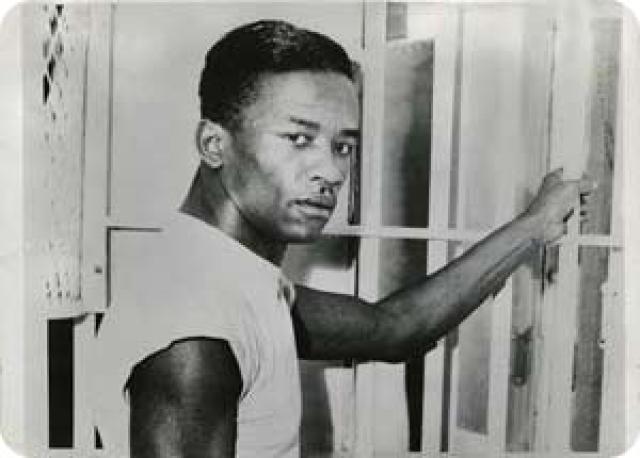
Willie McGee
 USA
Willie McGee was an African American laborer from Laurel, Mississippi, whose 1945 rape conviction and 1951 execution became the focus of a national and international campaign over racial injustice in the Jim Crow South. His case passed through three trials and several appeals; supporters argued that the proceedings were shaped by racial discrimination and intimidation, while the courts ultimately left the final conviction in place.
Early Life
McGee was born around 1915 or 1916 in Pachuta, Mississippi, and grew up in a working-class family. He attended segregated schools before entering the workforce. By 1945 he was living in Laurel and working as a delivery driver for a wholesale grocery business. He was married to Eliza Jane Patton, and the couple had four children.
Arrest and First Trials
In November 1945, Laurel resident Willette Hawkins accused McGee of raping her in her home. He was initially arrested in connection with a stolen delivery truck and then charged with rape. The charge carried the possibility of the death penalty. McGee reportedly made a confession after his arrest; his defense and later supporters maintained that it had been obtained under coercion. The disputed confession and the circumstances of the prosecution became central to the controversy around the case.
An all-white jury convicted McGee in December 1945 after deliberating for only a few minutes, and he was sentenced to death. The Mississippi Supreme Court later overturned that conviction, finding that the trial court had failed to grant a change of venue despite the charged atmosphere and threats surrounding the case.
A second trial was held in Hattiesburg in 1946. The jury again returned a guilty verdict quickly, but the state supreme court reversed it as well, this time over the exclusion of African Americans from the grand jury pool. A third trial took place in 1948. McGee testified that he had been tortured into confessing, but the jury again convicted him. The state supreme court upheld this verdict, and the U.S. Supreme Court declined to overturn it after further appeals.
A Civil-Rights Campaign
The Civil Rights Congress, a legal defense organization, organized a public campaign to save McGee. Its supporters argued that Mississippi applied the rape law along racial lines and that a Black defendant accused by a white woman could not receive a fair trial under the circumstances. They also advanced a disputed claim that Hawkins and McGee had been involved in a consensual relationship. That account was part of the campaign’s public case, not a finding established by the courts.
The campaign reached well beyond Mississippi. Activists organized petitions, rallies, fundraising, and protests, while prominent figures including Paul Robeson, Josephine Baker, and William Faulkner spoke publicly about the case. Bella Abzug, then a young lawyer, joined McGee’s legal team. Supporters’ efforts to secure further review and a reprieve drew international attention, and the U.S. government monitored the reaction abroad.
Execution and Historical Memory
After the courts rejected his final appeals and the governor denied clemency, McGee was executed shortly after midnight on 8 May 1951 in Laurel. The portable electric chair was set up in the Jones County courthouse where he had been convicted. His death ended the immediate campaign but fixed the case in public memory as a stark example of the racial inequities of the Southern justice system.
McGee’s guilt and the fairness of his prosecution have been discussed in later historical accounts, which have examined the evidence, the contested confession, the racial climate, and the advocacy campaign. What is clear is that two earlier convictions were overturned for serious procedural reasons, while the third conviction stood despite continued protests. The phrase “Free Willie McGee” became a rallying cry for people confronting racial injustice and unequal treatment under the law.


