Wladyslaw Opolczyk
 Poland
- Biography of Vladislaw Opolechik
- Early Life and Political Career
- Rise to Power and Achievements
- Downfall and Later Life
Biography of Vladislaw Opolechik
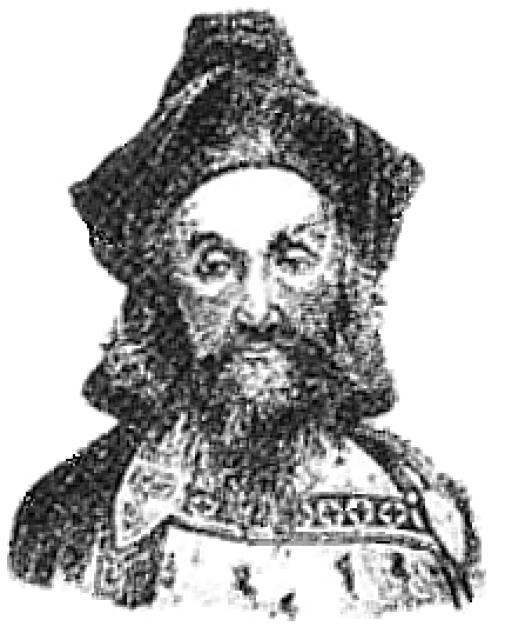
Vladislaw Opolechik was a Polish prince who ruled from 1356 to 1401. He inherited the Opolechik principality after the death of his father, Bolko II, in 1356. His brothers, Bolko III and Henry, also claimed rights to the principality, but Vladislaw managed to convince them to relinquish their claims, becoming the sole owner of the small territory.
Early Life and Political Career
Vladislaw was born to Bolko II, the prince of Opolechik, and Elzbieta Swidnicka, the granddaughter of Vladislaw Loketka. As a young man, Vladislaw had a desire to gain political experience and traveled to Hungary. After his father's death, he became the hereditary ruler of Opolechik and successfully resolved disputes with his brothers, maintaining control over the principality.
Vladislaw began his political career at the court of Louis I of Hungary in the early 1360s. In 1364, he participated in the massacre of Hungarians during a congress of monarchs in Krakow, which was convened by Casimir the Great. Two years later, he was entrusted with the diplomatic mission of negotiating a possible marriage between Louis and Wenceslaus of Luxembourg. This alliance was aimed at strengthening ties with the influential Luxembourg dynasty.
Rise to Power and Achievements
Vladislaw's faithful service to Louis quickly paid off. In early 1367, Louis appointed him as palatine, making him the most influential political figure at the Hungarian court. As palatine, Vladislaw had the authority to preside over judicial cases, with the Hungarian king serving as the final appellate court. He proved to be a talented administrator, convening 34 general congregations during his tenure to resolve legal disputes. His position also allowed him to collect two-thirds of judicial fees for his personal treasury.
Besides his political activities, Vladislaw also engaged in military campaigns and diplomatic missions. In 1368, he participated in a military expedition to Bulgaria, and in 1370, he actively supported the transfer of the Polish crown to Louis. He also played a role in the annulment of Casimir's will, which included provisions regarding the transfer of lands to his grandson and namesake, Casimir of Slupsk, as well as his other illegitimate sons.
Downfall and Later Life
In 1372, Vladislaw was removed from his position as palatine, losing a significant portion of his income. He was left with only a few castles in Hungary. Louis appointed him as the governor of Galicia-Volhynia, where he focused on economic development.
Vladislaw dedicated special attention to Lviv, which was merged with nearby Halych during his rule. Despite his overall successful economic activities as governor, his political position faced opposition from Galician nobles who disagreed with his strong support for the Catholic Church in Rus.
In 1382, Vladislaw's younger brother, Bolko III, died, leaving four young sons, and the Duke of Niedomice, Henry, also passed away. This allowed Vladislaw to expand his influence in Upper Silesia.
In 1382, Louis, Vladislaw's main patron, passed away. Although Vladislaw had previously supported Louis' daughters as candidates for the Polish throne, he eventually presented his own candidacy. However, realizing he lacked support from the nobility and leading figures, he backed Semovit IV of Plock. The new Polish king, Jagiello, considered Vladislaw a dangerous political rival and attempted to seize some of his lands in 1388. In response, Vladislaw staged a coup and captured Wawel, the royal residence in Krakow. However, he was subdued by General Starosta Paluka of Szubin and taken prisoner.
In 1391, a conflict arose between Vladislaw and Jagiello. Vladislaw had pledged strategic locations, such as Zlotoryja Castle, to the Teutonic Knights. In 1392, he handed over the Dobrzyn lands, which were promptly occupied by the Order. Vladislaw had plans to divide Poland between the Teutonic Knights, Hungary, and Brandenburg, but these plans failed as the main forces of the Teutonic Knights were concentrated in Samogitia.
The conflict between Vladislaw Opolechik and Jagiello ended in 1396 with Jagiello's victory. Royal forces occupied Vladislaw's territories in Silesia and then headed to Opole, where Vladislaw's nephews decided not to resist. This marked the end of Vladislaw's political career. He died in May 1401 in Opole and was buried in a Franciscan monastery.
Vladislaw was married twice. His first wife, Elzbieta Lackfich, whom he met during his first trip to Hungary, died childless in 1364. His second wife, Eufemia, the daughter of Semovit III of Mazovia, bore him five daughters.