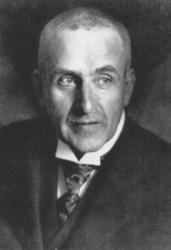
Wole Soyinka
 Nigeria
- Early Life and Education
- Theatrical Beginnings and Studies in England
- Early Plays and the Establishment of "Masks-1960"
- Political Activism and University Tenure
- Civil War and Literary Success
- Post-Civil War and Nobel Prize Recognition
- Later Life and Legacy
Early Life and Education
Wole Soyinka, a prominent Nigerian playwright, novelist, and poet, was born on July 13, 1934, in Abeokuta, Western Nigeria, then a British colony. Samuel Ayodele Soyinka, his father, was the headmaster of St. Peter's Primary (Anglican) School in Abeokuta, while his mother, Grace Eniola Soyinka, owned a store and was actively involved in politics.
From a well-to-do Yoruba family, Soyinka attended St. Peter's Primary School and subsequently won several awards for his writing at Abeokuta Grammar School. In 1946, he enrolled in Government College in Ibadan, the most prestigious secondary school in Nigeria at the time, where he immersed himself in Nigerian nationalism and British colonial influences.
Theatrical Beginnings and Studies in England
After graduating from college, Soyinka moved to Lagos in 1952 and worked as a clerk while writing radio plays and short stories for the Nigerian Broadcasting Service. In 1954, he traveled to the United Kingdom to study English literature at the University of Leeds, where he encountered talented young English writers.
At Leeds, Soyinka delved into drama theory under renowned scholar G. Wilson Knight, who emphasized the importance of theater as ritual and dialogue with the past. Inspired by Knight's teachings, Soyinka explored European theater and sought to bridge the theatrical cultures of Europe and Nigeria.
Early Plays and the Establishment of "Masks-1960"
After obtaining his Bachelor of Arts degree with honors in 1957, Soyinka continued at Leeds, working on his dissertation on Eugene O'Neill's plays. During this time, he wrote two significant early plays, "The Swamp Dwellers" and "The Lion and the Jewel," which delved into the clash between tradition and modernity in post-colonial Africa.
Upon returning to Nigeria in 1960, Soyinka founded the amateur theater group "Masks-1960." His masterpiece, "A Dance of the Forests," premiered on October 1, 1960, Nigeria's Independence Day. Along with his satirical play "The Trials of Brother Jero," which was staged in Ibadan that year, it brought Soyinka widespread recognition.
Political Activism and University Tenure
In 1962, Soyinka became a lecturer in English at the University of Ife. He engaged in a lively debate with "Negritude" proponents who romanticized African traditions and rejected European cultural influence. Soyinka argued that the "Negritude" movement failed to address Africa's pressing issues, and he famously declared, "The tiger does not proclaim his tigritude, he pounces."
Soyinka also voiced opposition to government censorship. He resigned in December 1963 in protest against the university administration's directive to support the Western Nigerian government. Two years later, following the Western Nigerian election, Soyinka (disguised as an announcer) declared over the radio that the results had been rigged, leading to his arrest and imprisonment for illegal broadcasting.
However, he was released two months later after a significant international outcry from prominent American and English writers. In 1965, Soyinka resumed his academic career as a senior lecturer at the University of Lagos and published his first novel, "The Interpreters."
Civil War and Literary Success
On the eve of the Nigerian Civil War in August 1967, Soyinka met with Igbo leader Chukwuemeka Odumegwu Ojukwu in an unsuccessful attempt to convince him against secession. Upon his return to Lagos 11 days later, Soyinka was detained on the personal orders of President Yakubu Gowon and charged with conspiracy.
Despite international protests, Soyinka spent 27 months in solitary confinement without access to human contact, medical care, books, or writing materials. Nevertheless, he managed to compose poems and make sketches for plays and a novel.
Released under a general amnesty in October 1969, Soyinka became the Director of the Drama School at Ibadan University. He staged his own play, "Kongi's Harvest," which satirized African dictatorship, and adapted it for film in 1970, starring in the lead role. Shortly before the film's release, Soyinka traveled to Europe, where he lectured, studied at Cambridge University's Churchill College, and wrote three major plays: "Jero's Metamorphosis," "The Bacchae" (based on Euripides' tragedy), and "Death and the King's Horseman."
Post-Civil War and Nobel Prize Recognition
Soyinka's prison memoir, "The Man Died," was published in London and New York in 1972. In 1975, he became the editor of the influential African magazine "Transition" and moved to Accra, Ghana. After the military coup that ousted President Gowon in July 1975, Soyinka returned to Nigeria and resumed his professorship at the University of Ife.
In 1986, Soyinka became the first African writer to receive the Nobel Prize in Literature "for creating a theatre in which the peoples of the world are compelled to see their own condition." The Swedish Academy praised his "wide and well-versed use of stages such as African rituals, traditional African masks and pantomimes, rhythm and music, declamation, and theatre within theatre."
Later Life and Legacy
Soyinka continued to write and publish plays, poetry, and prose. His work explores themes of identity, conflict, and the human condition, drawing from both African and Western traditions. He has been widely recognized for his contributions to literature, theater, and human rights activism.
Wole Soyinka is an internationally renowned figure and a towering voice in African and world literature. His works have inspired generations of writers, artists, and activists, and his legacy as a master of the stage, pen, and social conscience endures.