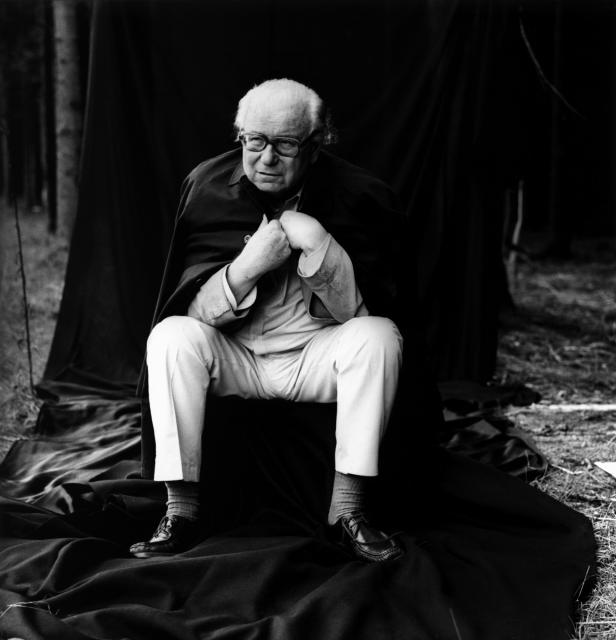
Wolfgang Koppen
 Germany
- Wolfgang Koeppen: A Literary Titan of the Post-War Era
- Early Life and Formative Years
- Literary Breakthrough and Exile
- "Notes from the Burrow" and the Holocaust
- "Trilogy of Failure": Post-War Germany Examined
- Travel Writings and Global Perspectives
- Late Works and Legacy
Wolfgang Koeppen: A Literary Titan of the Post-War Era
Wolfgang Koeppen, a pivotal literary figure in post-World War II Germany, left an indelible mark on the German literary landscape. His celebrated works, particularly his "Trilogy of Failure," have earned him a place among the most influential writers of the era.
Early Life and Formative Years
Wolfgang Koeppen was born out of wedlock in Greifswald, Germany. His father, a university ophthalmologist, refused paternity. In 1908, Koeppen relocated with his mother to Ortelsburg in East Prussia. During the Weimar Republic, he pursued careers in acting and writing, later becoming a feuilleton editor for the "Berliner B?rsen-Courier."
Literary Breakthrough and Exile
After losing his job upon the Nazis' seizure of power, Koeppen published his debut novel, "Unhappy Love," in 1934 while living in the Netherlands. In 1939, he returned to Germany and earned a living as a screenwriter. In 1943, he moved to Munich.
"Notes from the Burrow" and the Holocaust
In 1947, Koeppen was commissioned to edit the memoirs of Jacob Littner, a Polish-Jewish survivor of the Holocaust. "Notes from the Burrow," published in 1948, became a controversial work due to Koeppen's significant editorial contributions. A later republication in 1992 under Koeppen's sole authorship led to a lawsuit, revealing Littner's original text.
"Trilogy of Failure": Post-War Germany Examined
Koeppen's "Trilogy of Failure" ("Pigeons in the Grass," "The Hothouse," "Death in Rome") provided a scathing critique of post-war Germany. His writing unveiled the lingering ideologies and behaviors that had fueled fascism and war. He remained an outsider, his works rooted in classical modernism.
Travel Writings and Global Perspectives
Beginning in the mid-1950s, Koeppen traveled extensively, writing numerous radio essays on countries around the world. His travel writings, including "To Russia and Other Lands" and "Journey to America," offered insights into the post-war global landscape.
Late Works and Legacy
Koeppen's later years were marked by autobiographical reflections and the co-authorship of a screenplay about Venice. His writing pace slowed down in the last decade of his life.
Wolfgang Koeppen died in Munich shortly after his 90th birthday and was buried in the Nordfriedhof cemetery. His legacy lives on through the Koeppen Prize, awarded annually by the city of Greifswald, and the Wolfgang Koeppen Literary Center at the University of Greifswald, which houses his archive.