Yakopo Pontormo
 Italy
Italy- Jacopo Carucci: A Pioneering Visionary
- The Birth of Mannerism
- The Frescoes of Poggio a Caiano
- The Dark Side of Mannerism
- Portraiture and the Human Psyche
- The Artist as a Nonconformist
- Enduring Legacy
Jacopo Carucci: A Pioneering Visionary
Early Influences and Artistic TrainingIn his formative years, Jacopo Carucci, known as Pontormo, sought guidance from renowned High Renaissance masters, including Leonardo da Vinci and Andrea del Sarto. His mastery of contemporary artistic techniques is evident in his 1519-1520 fresco at the Medici Villa in Poggio a Caiano.
The Birth of Mannerism
Italian Renaissance art had long pursued the ideals of naturalism, liberating the human body from medieval constraints and revealing the individuality of the human spirit. However, this pursuit led to unexpected consequences. Freed from traditional restraints, the individual became lost in the face of incomprehensible and formidable forces.
Amidst these dilemmas, Pontormo emerged as the father of Mannerism, a novel artistic movement that emphasized personal style over imitation of nature. The term "mannerism" stems from the Italian word "maniera," meaning style or handwriting, and characterized Pontormo's unique approach: experimentation, abstraction, and a rejection of the classical principles of the Renaissance.
The Frescoes of Poggio a Caiano
In his Poggio a Caiano frescoes, Pontormo's Mannerist tendencies are apparent. While the figures exhibit the natural poses valued by the Renaissance, their complexity and contortions elevate them to a realm of abstract expression. The composition, with its parapet and tree, allows Pontormo to arrange figures in multiple planes, creating an otherworldly rhythm and harmony.
Despite its departure from classicism, the fresco retains the Renaissance emphasis on naturalism, seen in the relaxed poses and the depiction of everyday people. Pontormo, however, injects an emotional intensity by using an unconventional palette of vibrant and discordant colors, reminiscent of Northern European Gothic influences.
The Dark Side of Mannerism
Pontormo's later ecclesiastical commissions, such as his 1525-1528 "Deposition" for the Church of Santa Felicita in Florence, reveal a profound shift in his art. The figures are elongated and weightless, floating in a void-like space, their poses expressing intense grief and sorrow. The use of jarring colors and dramatic lighting creates a mystical and haunting atmosphere.
In this work, Pontormo's Mannerism transforms the human form into a vessel for universal emotions, representing not the individual experience but a collective suffering. This departure from the humanist principles of the Renaissance foreshadows the imminent end of the era.
Portraiture and the Human Psyche
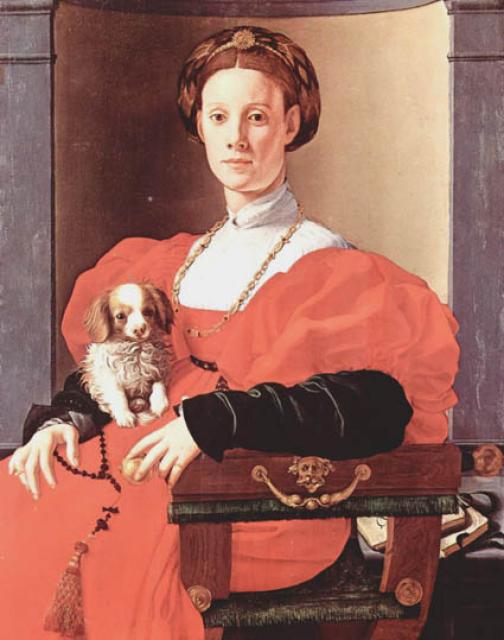
Pontormo's artistic innovations extended to portraiture, challenging the classical conventions of the genre. His portraits explore the psychological depths of his subjects, revealing their complexities and inner emotions.
The Artist as a Nonconformist
In personality and artistic expression, Pontormo stood apart from his Renaissance peers. Orphaned at a young age, he developed a solitary and unconventional nature. Driven by his artistic aspirations, he often neglected deadlines and immersed himself in experimentation, willing to abandon completed works in pursuit of perfection.
Yet, despite his eccentricities, Pontormo was a humble and generous man who nurtured his students with love and guidance. He enjoyed lifelong patronage from Michelangelo, who recognized his exceptional talent.
Enduring Legacy
Pontormo's influence on art history is immeasurable. His Mannerist style paved the way for a new era in artistic expression, characterized by emotional intensity, psychological exploration, and a departure from classical ideals. His work continues to inspire and challenge artists to this day.