Yakopo Sansovino
 Italy
Italy- Jacopo Sansovino: The Renaissance Architect of Venice
- Rise to Prominence in Rome
- Return to Rome and Work in Florence and Venice
- Architectural Masterpieces in Venice
- Personal Life and Legacy
Jacopo Sansovino: The Renaissance Architect of Venice
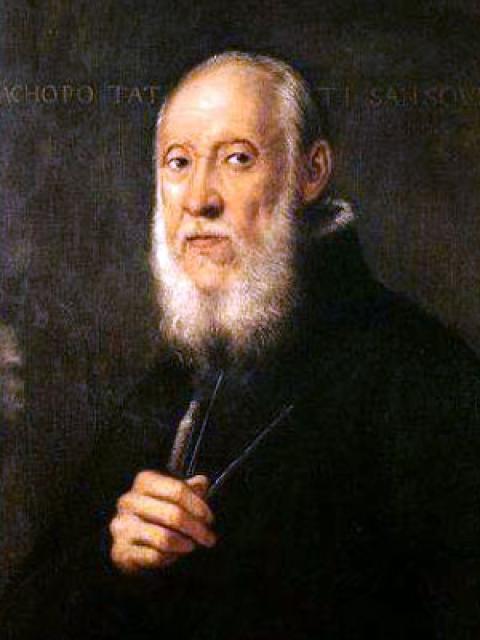
Early Life and Artistic TrainingJacopo d'Antonio, nicknamed Sansovino (1486-1570), was born in Florence, Italy. From a young age, he displayed a remarkable aptitude for drawing, and his mother encouraged his pursuit of art. Despite his initial resistance, his father eventually allowed him to study sculpture under Andrea Sansovino (1467-1529) in Florence in 1502.
Rise to Prominence in Rome
In 1505, Sansovino traveled to Rome with Giuliano da Sangallo (1445-1516), architect to Pope Julius II. There, he studied ancient architecture and restored sculptures, earning the patronage of Donato Bramante (1444-1514). Bramante commissioned Sansovino to restore several antique sculptures, a task he executed with such skill and precision that the Pope declared his work to be unmatched.
However, Sansovino's health deteriorated due to overwork, and he was forced to return to Florence in 1511. Nevertheless, his reputation as a talented sculptor and architect had been established.
Return to Rome and Work in Florence and Venice
In 1518, Sansovino returned to Rome and designed his first architectural work, the Church of San Giovanni dei Fiorentini (1518-1523). He then traveled to Florence and spent the summer of 1523 in Venice. In 1527, he fled from Rome after it was sacked by Emperor Charles V and made Venice his permanent home.
Architectural Masterpieces in Venice
As Chief Architect of the Venetian Republic from 1529, Sansovino oversaw significant urban development projects and designed numerous important buildings. Among his most renowned works are:
- Palazzo Corner della Ca' Grande (1532): This opulent palace showcased Sansovino's innovative use of monumental scale and classical elements.
- Biblioteca di San Marco (1536-1588): The library's elegant façade, adorned with slender columns and arcades, exemplified Venetian Renaissance architecture.
- Zecca (1537-1545): The Mint's impressive rustique exterior and practical design were highly praised.
- Loggetta (1537-1540): This small portico at the foot of the Campanile di San Marco displayed Sansovino's mastery of decorative detailing and harmonious proportions.
Personal Life and Legacy
Sansovino's personal qualities were as esteemed as his artistic talent. He was known for his intelligence, meticulous planning, and unwavering commitment to his work. Despite his longevity (he lived to the age of 84 according to most sources), he maintained his physical and mental vigor until the end.
After retiring from active practice in 1568, Sansovino died in Venice in 1570. His remains were buried with great honor in the chapel he had designed for himself in the Church of San Gimignano.
Sansovino's architectural legacy in Venice was profound. His monumental buildings and graceful public spaces transformed the city's urban landscape, shaping its distinctive Renaissance character that continues to inspire to this day.