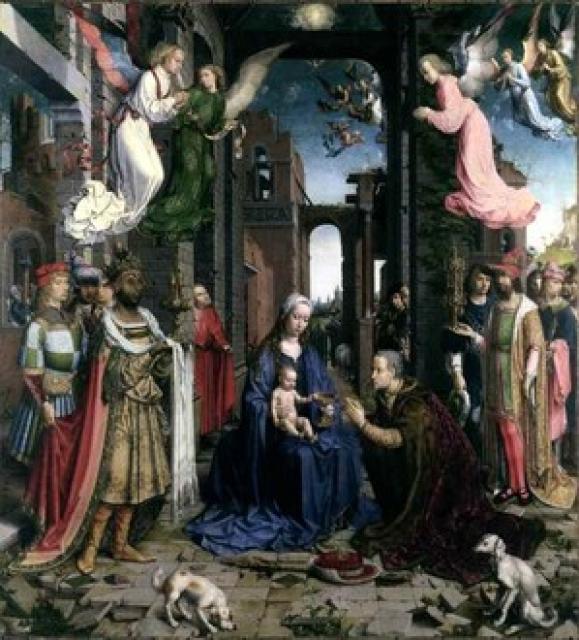
Yan Gossart
 Netherlands
- Jan Gossaert: A Pioneer of Romanism in Netherlandish Art
- Service to the Burgundians and Habsburgs
- Rococo and Renaissance Influences
- Biblical and Classical Themes
- Portraits with Monumental Grandeur
- Notable Works
- "Portrait of Jean Carondelet"
- Later Life and Legacy
Jan Gossaert: A Pioneer of Romanism in Netherlandish Art
Early Life and TrainingJan Gossaert, also known as Mabuse, was born around 1478 in Maubeuge, France. He was possibly a pupil of Geertgen tot Sint Jans and became a member of the Antwerp Guild of Saint Luke in 1502.
Service to the Burgundians and Habsburgs
Around 1507, Gossaert entered the service of Philip of Burgundy, accompanying him on a trip to Rome from 1508 to 1509. He continued to work for Philip and also received commissions from the Habsburg dynasty.
Rococo and Renaissance Influences
Transitioning to RomanismGossaert played a crucial role in introducing Renaissance aesthetics to Netherlandish art. He drew inspiration from Italian masters such as Leonardo da Vinci's followers in Milan and was also influenced by Albrecht Dürer.
Biblical and Classical Themes
Gossaert's works often depicted biblical and classical subjects, featuring nude figures set against detailed natural landscapes, reflecting his Dutch heritage.
Portraits with Monumental Grandeur
Gossaert was also a renowned portraitist, known for creating images that exuded monumental grandeur.
Notable Works
"The Baptism" and "Neptune and Amphitrite"Two of Gossaert's most famous works are "The Baptism of Christ" (1516) and "Neptune and Amphitrite" (1516), both of which are now in the Bode Museum in Berlin.
"Portrait of Jean Carondelet"
Another celebrated painting by Gossaert is the diptych portrait of Jean Carondelet (1517), currently housed in the Louvre in Paris.
Later Life and Legacy
Gossaert died in Middelburg between 1533 and 1536. His pioneering efforts in fusing Netherlandish realism with Renaissance influences left an enduring legacy in Northern European art.



