Yanka Kupala
 Belarus
- Biography of Yanka Kupala
- Education and Early Career
- Literary Contributions
- Revolutionary Movement and Soviet Era
- Later Works and Recognition
- Legacy and Achievements
Biography of Yanka Kupala
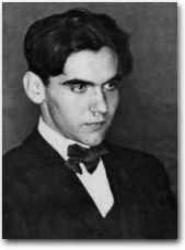
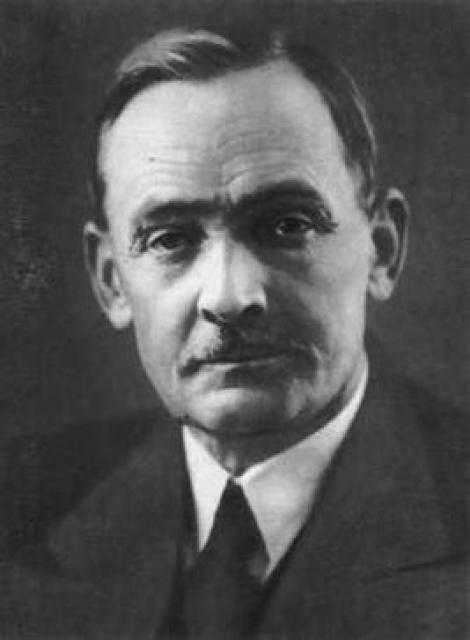
Yanka Kupala, whose real name was Ivan Dominikovich Lutsevich, was born on June 25, 1882, in Viazynka, now in the Molodechno District of the Minsk Region. He came from a family of small tenants belonging to landless peasants. Despite his humble background, Kupala went on to become a renowned Belarusian poet, often referred to as the National Poet of Belarus.

Education and Early Career
Kupala studied at the general education courses of A. S. Chernyaev in St. Petersburg from 1909 to 1913. Later, in 1915, he attended the A. L. Shanyavsky People's University in Moscow. In his younger years, Kupala worked as a private tutor, clerk, and laborer, experiencing various professions before dedicating himself fully to poetry.
Literary Contributions
Kupala's literary journey began in 1905 when he published his first poem, "Muzhik." From 1907 onwards, he contributed to the newspaper "Nasha Niva" and eventually became one of its employees, serving as an editor in 1914-1915. Alongside the poet Yakub Kolas, Kupala laid the foundation for the new Belarusian literature. The influential writer Maxim Gorky played a significant role in Kupala's ideological and creative development.
Revolutionary Movement and Soviet Era
Kupala closely aligned himself with the revolutionary liberation movement of the people. His poetry depicted the profound changes in the lives of the Belarusian people during the Soviet era. Notable works during this period include poetry collections such as "Zhaleika" (1908), "Guslyar" (1910), "The Road of Life" (1913), lyrical and epic poems like "Eternal Song" (1908, published in 1910), "The Burial Mound," "Dream on the Burial Mound" (both 1910), "Bondarovna" (1913), "She and I" (1910, published in 1913), "The Lion's Grave" (1913), and plays like "Pavlinka" (1913) and "The Ruined Nest" (1913, published in 1919).
Later Works and Recognition
In later years, Kupala's poetry continued to evolve, inspired by the struggle for building socialism. His works reflected the patriotic spirit and resistance against the fascist invaders during the Great Patriotic War (1941-1945). Notable works from this period include poetry collections such as "Inheritance" (1922), "Nameless" (1925), "Song to Construction" (1936), "Belarus, the Order-Bearer" (1937), "From the Heart" (1940; awarded the State Prize of the USSR in 1941), epic poems like "Over the River Oressa" (1933), "Taras' Fate" (1939), and more.
Legacy and Achievements
Yanka Kupala's poetry was deeply rooted in the best artistic and democratic traditions of the Belarusian people. It incorporated the lyricism and melody of folk songs and drew inspiration from the achievements of Russian artistic culture. In addition to his own original works, Kupala also translated renowned literary works into the Belarusian language, including "The Tale of Igor's Campaign" and Alexander Pushkin's "The Bronze Horseman," as well as works by Taras Shevchenko, Adam Mickiewicz, Maria Konopnitskaya, Nikolay Nekrasov, Alexei Koltsov, Ivan Krylov, and others.
Yanka Kupala was awarded the Order of Lenin for his significant contributions to Belarusian literature. In 1945, a museum dedicated to Kupala was opened in Minsk, serving as a testament to his enduring legacy. His works have been translated into numerous languages and have resonated with people both within the Soviet Union and abroad.