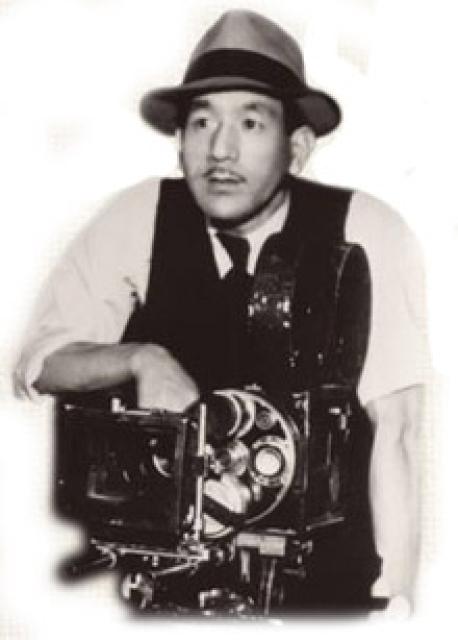
Yasudziro Odzu
 Japan
Japan- Biography of Yasujirō Ozu
- Early Works and Transition to Mature Comedy
- Signature Style and Silent Era Masterpieces
- War Period and Post-War Masterpieces
- Exploration of Family Life
- Later Years and Recognition
Biography of Yasujirō Ozu
Yasujirō Ozu was a renowned Japanese film director known for his melancholic films that depict the gradual devaluation of traditional family values. He began his career in the film industry in 1923 as an assistant cinematographer at the Kamata Studio in the Setsuko Film Company. However, he soon transitioned to become an assistant director and made his debut in the genre of jidaigeki with the film "Sword of Penitence" in 1927. From then on, Ozu focused solely on creating films set in contemporary times.

Early Works and Transition to Mature Comedy
Ozu's early works were influenced by American comedies and included films such as "Lost Wife," "Foolish Girl," "Moving House" (all in 1928), "Days of Youth," "Mountain Treasure" (both in 1929), and more. However, it was his films "I Graduated, But..." "I Was Born, But..." and "A Straightforward Boy" (all in 1929) that marked his transition to mature comedies with elements of satire, highlighting social inequality. He delved into the traditional genre of "semingeki," which depicted the everyday life of ordinary families, rarely straying beyond its boundaries.
Signature Style and Silent Era Masterpieces
Ozu developed his own directorial style closely tied to the aesthetics of Japanese art. His films were characterized by the absence of sharp dramatic conflicts, calm composition, linear progression of time, simple editing, slow-paced action, long static shots captured from a low frontal angle, clear and precise frames, and absence of fades and dissolves.
His notable silent era films include "Tokyo Chorus" (1931), "I Was Born, But..." (1932), "The Story of Floating Weeds" (1934), and "The Only Son" (1936). Ozu's first sound film was "The Only Son" in 1936.
War Period and Post-War Masterpieces
During the years of the Second Sino-Japanese War (1937-1939), Ozu served in the army. His works during the war included "The Todas' Brother and Sister" (1941) and "There Was a Father" (1942), with the latter being considered a classic in Japanese cinema. After the war, Ozu created films that are regarded as masterpieces of world cinema, including "Late Spring" (1949), which depicted the devoted love of an adult daughter for her father, and "Tokyo Story" (1953), which portrayed the elderly parents finding solace not from their own children, who were preoccupied with their own lives, but from the widow of their deceased son.
Exploration of Family Life
Ozu's post-war films continued to explore Japanese family life. These films, such as "Early Summer" (1951), "Flavor of Green Tea over Rice" (1952), "Tokyo Twilight" (1957), "Equinox Flower" (1958, his first color film), "Good Morning" (1959), "Floating Weeds" (1959), "Early Autumn" (1961), and "An Autumn Afternoon" (1962), highlighted the gradual devaluation of familiar family values and were imbued with a sense of melancholy.
Later Years and Recognition
From 1954, Ozu served as the chairman of the Association of Japanese Film Directors. In 1958, he was awarded the prestigious Order of the Purple Ribbon, and in 1962, he became the first filmmaker to be admitted as a member of the Japan Art Academy.