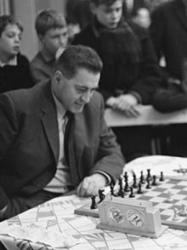
Ye Jiangchuan
 China
Ye Jiangchuan is one of the most influential figures in modern Chinese chess: a seven-time national champion who later became a leading coach and administrator. He helped raise the level of the game both at the board and behind the scenes, guiding generations of Chinese players as the country emerged as a world chess power.
A late start, an enduring career
Born in Wuxi, Jiangsu, on 20 November 1960, Ye took up international chess at 17, later than many elite players. He progressed quickly, winning his first Chinese championship at 20. Over the next 15 years he captured the national title seven times, in 1981, 1984, 1986, 1987, 1989, 1994 and 1996.
Ye earned the International Master title in 1983 and became a Grandmaster in 1993. His own play brought him into the world’s upper ranks: in 2000 he became the first Chinese player to surpass a FIDE rating of 2600, a major milestone for the country’s chess scene. At the 2001 FIDE World Championship, he reached the round of 16.
Building a national team
In 2000, Ye became chief coach of China’s men’s and women’s national teams. His coaching spanned the careers of world champions including Xie Jun, Zhu Chen, Xu Yuhua and Hou Yifan. Under his guidance and the broader training system he helped shape, Chinese chess gained growing international strength, with its players and teams becoming regular contenders for the sport’s highest honors.
His shift from full-time competition to coaching reflected a wider ambition: to create a lasting pipeline of players, not simply individual stars. Ye became known as a strategist and mentor who could connect elite preparation with the long-term development of chess in China.
A leader beyond the board
Ye also served as president of the Chinese Chess Association and continued to contribute as a coach and advocate for the game. His career bridges two important eras: the rise of Chinese players in international competition and the creation of a deep national system capable of sustaining that success.
From a teenager who began chess relatively late to a grandmaster who shaped the careers of multiple world champions, Ye Jiangchuan’s legacy is both personal and institutional. His influence can be seen in his own championship record and in the generations of Chinese players who followed.