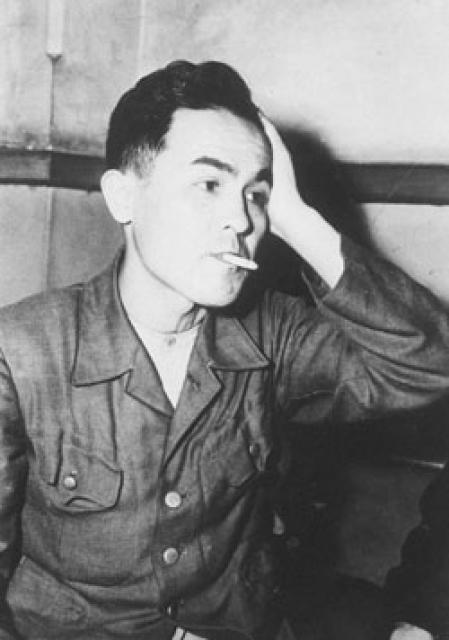
Yoshio Kodaira
 Japan
- Early Life and Military Service
- A Previous Conviction
- Crimes in a Country in Crisis
- Trial and Execution
- Legacy and Historical Context
Yoshio Kodaira was a Japanese serial killer whose crimes became a grim symbol of the social dislocation surrounding Japan’s defeat in World War II. A former Imperial Japanese Navy serviceman, he was convicted of seven murders committed in the final months of the war and the first year of the Allied Occupation. Ten killings were charged, but three were not proven in court. His case drew intense public attention and remains part of the history of crime and postwar memory in Japan.
Early Life and Military Service
Kodaira was born on January 28, 1905, in Tochigi Prefecture. In 1923 he joined the Imperial Japanese Navy, serving in a land-based unit. He was deployed to China in 1928 and was decorated for service. Accounts of his time there later became part of the public discussion around his crimes: during interrogation, he reportedly described taking part in violence against Chinese women. Those statements were discussed after the war as evidence of how military violence and postwar crime could be linked in public memory, though they did not form part of the murder convictions for which he was ultimately executed.
A Previous Conviction
After leaving the Navy, Kodaira returned to Japan. In 1932 he killed his father-in-law and was sentenced to a lengthy prison term. He was released early in 1940 under wartime amnesty. The earlier conviction marked a documented history of serious violence years before the crimes that made his name widely known.
Crimes in a Country in Crisis
Between 1945 and 1946, as Japan faced defeat, shortages and the breakdown of ordinary employment and food distribution, Kodaira targeted women who were trying to find work or secure food. He approached them with offers of help and took advantage of the desperation of the period. The social conditions do not explain away his actions; they show how he exploited people made vulnerable by the circumstances around them.
He was arrested on August 20, 1946, after investigators connected him to a young woman who had disappeared. The case rapidly became a national story. The crimes were widely covered in newspapers, and the public debate extended beyond the investigation itself to questions about violence, wartime experience and the strained conditions of life in occupied Japan.
Trial and Execution
Prosecutors charged Kodaira with ten murders. In June 1947, the Tokyo District Court found him guilty of seven and acquitted him of three for lack of sufficient evidence. The distinction is important: although he was suspected or accused in ten deaths, seven were established by the court. He received a death sentence, which was upheld on appeal. The Supreme Court rejected his final appeal on November 16, 1948.
Kodaira was executed at Miyagi Prison on October 5, 1949, at the age of 44. His execution ended the criminal proceedings against him.
Legacy and Historical Context
Kodaira’s case became one of the most notorious criminal cases of the early postwar years. Historian Benjamin Uchiyama has examined how the crimes became part of a broader public reckoning with defeat and Japan’s wartime past. Some commentators connected Kodaira’s violence to his experience in China; others emphasized the collapse of social order and material hardship after surrender. These explanations were part of public debate, not defenses of the crimes.
The story is also a reminder to distinguish the historical record from later sensational retellings. The court established seven murders, not ten, and the victims’ circumstances should not be reduced to lurid detail. Kodaira’s notoriety grew from the brutality of his actions, but also from the way his case forced postwar Japan to confront the continuities between wartime violence and violence at home.