Yulian Tuwim
 Poland
Biography of Julian Tuwim
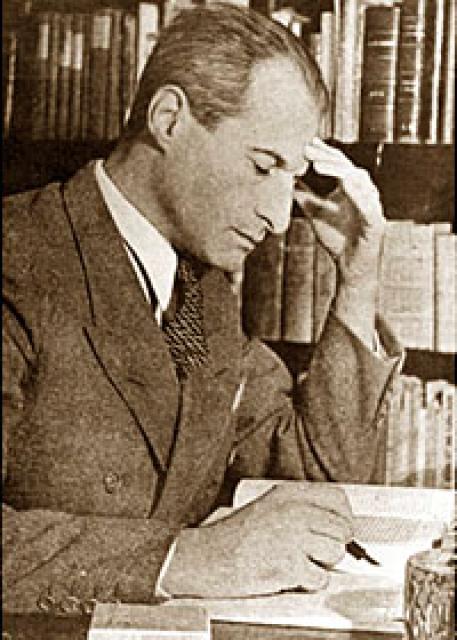
Julian Tuwim was a Polish poet known for his works for children. He was born into a Polish Jewish family and completed his education in Warsaw. From 1916 to 1918, he studied law and philosophy at the University of Warsaw. Tuwim made his debut as a poet in 1913 with the publication of his poem "Plea" in the "Warsaw Courier" (Kurierze Warszawskim). He was greatly influenced by poets such as Walt Whitman and Arthur Rimbaud. His poetry often used colloquial and everyday language. The optimism reflected in his early poems gradually gave way to a bitter and disillusioned worldview.
Tuwim's poem "Ball at the Opera," which satirized the Polish government, was banned by the censorship authorities. He was one of the founders of the experimental literary group Skamander in 1919. From 1924, Tuwim wrote a weekly column in the newspaper "Literary News" (Wiadomości Literackie). In the pre-war 1930s, his poems included sharp criticism of fascism. During his exile from 1939 to 1945, he continued to speak out against fascism.
Tuwim translated various works of Russian and Soviet literature into Polish, including "The Lay of the Host of Igor" and "Woe from Wit" by Alexander Griboedov, as well as the poetry of Alexander Pushkin, Vladimir Mayakovsky, and Boris Pasternak. He is best known to Russian readers through the translations by Samuil Marshak.
Some of Tuwim's notable works include "Lying in Wait for God" (Czyhanie na Boga, 1918), "Socrates Dancing" (Sokrates tańczący, 1920), "Seventh Autumn" (Siódma jesień, 1922), "Fourth Volume of Poems" (Czwarty tom wierszy, 1923), and "Words in Blood" (Słowa we krwi, 1926). He also wrote satirical poems such as "Bal in the Opera" (Bal w Operze, 1936) and published collections like "Polish Dictionary of Drunkenness" and "Bacchic Anthology" (1935), "Flaming Essence" (Treść gorejąca, 1936), and "Locomotive" (Lokomotywa, 1938).
Tuwim's contributions to Polish literature include works such as "Four Centuries of Polish Fraszkas" (Cztery wieki fraszki polskiej, 1937), "Polish Fantastic Novel" (Polska nowela fantastyczna, 1949), and the unfinished poem "Polish Flowers" (Kwiaty polskie, published in fragments, 1949). He also wrote "Pegasus of the Oak, or Panopticum of Poetry" (Pegaz dęba, czyli Panopticum poetyckie, 1950) and the cycle "From New Poems" (1953).
In addition to his achievements in poetry, Tuwim was a prominent figure in Polish cultural and intellectual circles. His works continue to be celebrated and appreciated for their profound impact on Polish literature and his contributions to children's poetry.