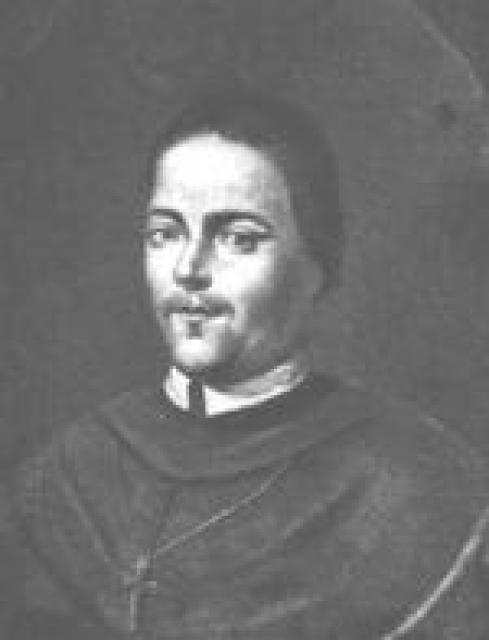
Igniat Dzhurdzhevich
- Early Life and Education
- Public Life and Literary Pursuits
- Religious Vocation and Jesuit Interlude
- Return to Dubrovnik and Benedictine Monasticism
- Poet of Diverse Genres and Influences
- Conflict with the Church and Exile
- Academy Membership and Historical Interests
- Literary Development and Poetic Innovation
- Return to Religious Leadership and Literary Legacy
- Recognition and Impact
Early Life and Education
Ignjat Djurdjević, born as Niko Maria in the aristocratic Republic of Dubrovnik, was drawn to the pursuit of knowledge from a young age. At the tender age of ten, he embarked on a path of learning at the Jesuit school, mastering the intricacies of grammar and rhetoric.
Public Life and Literary Pursuits
Upon reaching adulthood at 18, Djurdjević entered the Great Council, a prominent governing body in Dubrovnik. His responsibilities extended to serving as prince of the nearby island of Šipan and captain of the Lovrijenac fortress.
Despite his public duties, Djurdjević found solace in literary expression. He penned successful love poems and poetic psalm adaptations. However, his more ambitious works, such as the tragedy "Judith" and an authorized translation of Virgil's "Aeneid," met with less acclaim.
Religious Vocation and Jesuit Interlude
Driven by a perceived unrequited love, Djurdjević abruptly abandoned secular life in 1698. He joined the Jesuit order in Rome and soon became a professor of rhetoric in various Italian cities, adopting the name Ignatius in honor of the order's founder.
Return to Dubrovnik and Benedictine Monasticism
In 1705, Djurdjević left the Jesuits, citing health issues. However, his departure was likely motivated by his restlessness and desire to fully immerse himself in poetry. He returned to Dubrovnik and entered the Benedictine monastery of St. James.
Poet of Diverse Genres and Influences
Djurdjević's poetic output during this period encompassed a wide range of genres and influences. His "Various Poetic Pastimes" collection included love lyrics inspired by Ovid, religious verses modeled after ancient poets like Plautus, and epigrams reminiscent of Martial.
Conflict with the Church and Exile
In 1710, Djurdjević's support for the Benedictines of Dubrovnik to come under the direct authority of Monte Cassino led to his expulsion from the city by the Senate. However, after two years in Italy, papal intervention secured his pardon and return.
Academy Membership and Historical Interests
Djurdjević became a member of the Academy of Concord in Dubrovnik, where he eventually served as president. Inspired by the Roman literary academy "Arcadia," the Academy embraced pastoral themes and a rejection of excessive ornamentation.
Djurdjević's historical research also came to the forefront during this period. He contributed to the compilation of "Biographies and Poems of Famous Dubrovnicians," a significant work on local literary history.
Literary Development and Poetic Innovation
Djurdjević's artistry continued to evolve, blending pastoral influences with elements of Baroque style. His playful and elaborate poem "Sighs of the Penitent Magdalene" demonstrated this stylistic fusion.
Return to Religious Leadership and Literary Legacy
Following a conflict with the Bishop of Dubrovnik, Djurdjević left the city again and became abbot of a Benedictine monastery on the island of Mljet. He also traveled to Italy to resolve publishing matters.
Upon his return to Dubrovnik, Djurdjević became the head of the Benedictine congregation and resided at the monastery of St. James until his death at the age of 62. Throughout his life, he composed works in both Latin and Slavic languages, celebrating the beauty of his native tongue.
Recognition and Impact
Djurdjević's poetry and historical writings have left a lasting legacy in Croatian literature. His exploration of diverse themes, from love to religion to history, demonstrated his versatility and depth as a literary figure. He is recognized as one of the most prominent poets of his time, bridging the gap between Baroque and pastoral styles and inspiring generations to come.