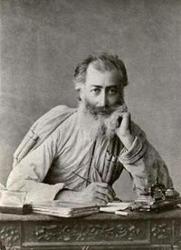
Yuriy Kazakov
- Early Life and Education
- Literary Beginnings
- The Allure of the Russian North
- Dabbling in Detective Fiction
- International Recognition
- A Sanctuary in Abramtsevo
- Shifting Literary Focus
- Personal Struggles and Decline
- Legacy and Posthumous Publications
Early Life and Education
Yuri Kazakov, a prominent Russian Soviet writer and screenwriter, was born in Moscow on August 8, 1927, into a working-class family. His childhood was spent at 30 Arbat Street, where he witnessed the horrors of World War II, which he later reflected upon in his unfinished novel "Two Nights." After graduating from a construction technical school in 1946, Kazakov pursued music at the Gnessin Music School (1951). He briefly played in an orchestra before realizing that his true calling lay elsewhere.
Literary Beginnings
Kazakov's literary career began in the early 1950s with the publication of his play "New Machine" and the short story "The Offended Policeman." His hunting stories quickly garnered attention for their vivid descriptions and engaging narratives. In 1958, he graduated from the Gorky Literary Institute.
The Allure of the Russian North
Throughout his life, Kazakov was captivated by the pristine and unique beauty of the Russian North. He frequently traveled to the region, keeping a "Northern Diary" that contained travelogues, historical accounts, and portraits of the local Pomors. One of his last works, the novel "The Boy from the Snow Pit," recounts the extraordinary life of Tyko Vylka, a Nenets self-taught prodigy.
Dabbling in Detective Fiction
In 1964, Kazakov contributed to the collective detective novel "Let the Laughing Laugh," which was serialized in the newspaper "Nedelya."
International Recognition
Spring 1967 found Kazakov in France, gathering material for a projected book on his literary idol, Ivan Bunin. He met with noted figures such as Boris Zaitsev and Georgy Adamovich. Kazakov's remarkable short stories were translated into several European languages, earning him the Dante Prize in Italy in 1970.
A Sanctuary in Abramtsevo
The proceeds from Kazakov's translation of the trilogy "Blood and Sweat" by Akim Nurepeisov allowed him to purchase a dacha in Abramtsevo, which became his permanent residence.
Shifting Literary Focus
In 1969, he published the short story collection "Autumn in the Oak Forests." During the 1970s, his writing style evolved, culminating in the introspective monologues of "The Candle" and "In Your Dreams, You Cried Bitterly," addressed to his young son.
Personal Struggles and Decline
Kazakov's final years were marked by dwindling literary output and growing seclusion. Despite his reputation for raw and rugged prose, those who knew him described him as paradoxically gentle and poetic. He experienced personal turmoil, separating from his wife, distancing himself from his son, and enduring the loss of his father.
Legacy and Posthumous Publications
Kazakov died on November 29, 1982, and was laid to rest at Moscow's Vagankovo Cemetery. Posthumously, the book "Two Nights" was published, containing unpublished and unfinished works. According to Yuri Nagibin, Kazakov's archive was subject to looting after his death, leaving many manuscripts lost to posterity.