Yves Klein
 France
Biography of Yves Klein
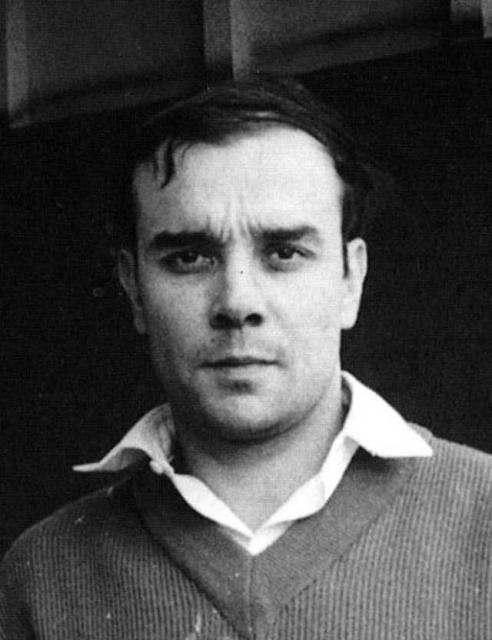
Yves Klein was a French artist and innovator, considered one of the most significant figures in post-war European art. Born on April 28, 1928 in Nice, France, he came from a family of artists. His father, Fred Klein, was a Dutch artist of Indonesian descent who painted in the style of Post-Impressionism, and his mother, Marie Raymond, was a prominent figure in Tachism.
From 1928 to 1946, Yves Klein lived in Paris but spent every summer in Cannes-sur-Mer, where his mother's sister, Rosa Raymond, lived. He adored his aunt and she provided him with care and support. Klein attended the Higher School of Merchant Navy and the Higher School of Oriental Languages from 1942 to 1946, but did not receive any formal artistic education. For most of his life, he worked as a judo instructor.
In late 1947 and early 1948, Klein discovered the book "La Cosmogonie des Rose-Croix" ("The Cosmogony of the Rosicrucians"), which became his daily study for the next four to five years. He later joined the Rosicrucians with his friend Claude Pascal. In the summer of 1948, Klein visited Italy and then served in the military in Germany for eleven months. In late 1949, Klein and Pascal temporarily moved to London, where they continued their judo training.
In 1951, Klein went to Madrid to study Spanish. Initially, he and Pascal planned to embark on a world tour, but Pascal's health issues prevented him from participating. In Spain, Klein joined a judo club and befriended the school director, Fernando Franco de Saravia, whose father was a publisher. In 1952, Klein arrived in Yokohama and later moved to Tokyo to register at the Kodokan Institute, the most prestigious judo center. He spent fifteen months in Japan, dividing his time between the institute and giving French language lessons to American and Japanese students. During his stay, he wrote a book on judo and received a black belt.
In 1953, Klein terminated his membership with the Rosicrucians. After returning to Paris in 1954, his hopes of securing a position in the French Judo Federation were not realized, despite the publication of his book "The Foundations of Judo." He decided to leave France and moved to Spain at the invitation of Fernando Franco de Saravia. In Spain, Klein published two collections of monochromes at the engraving studio of Fernando near Madrid. The preface by Claude Pascal consisted of black lines instead of text, and ten colored plates were composed of monochrome rectangles, accompanied by their size measurements in millimeters. Each plate indicated different places of creation: Madrid, Nice, Tokyo, and Paris. This work became Klein's first public gesture, in which he raised the question of illusion in art.
In late 1954, Klein returned to Paris. In the spring of 1955, he presented an orange monochrome titled "Expression de l'univers de la couleur mine orange" at the Salon Realites Nouvelles, dedicated to abstract painting. The rectangular wooden panel was evenly covered with matte orange paint, signed with the monogram YK, and dated May 1955. The work was rejected by the jury. In October 1955, Klein's first public exhibition of his works took place at Club des Solitaires, a private salon of the Lacoste publishing house. In 1956, Klein met Iris Clert, who owned a small studio in Paris, and later became his assistant and wife.
In February-March 1956, Klein held an exhibition titled "Yves, Propositions Monochromes" at the Colette Allendy gallery in Paris, with a radical and provocative text written by Pierre Restany for the invitations. During the vernissage, Klein met Marcel Barillon de Murat, a knight of the Order of Saint Sebastian Archers, who invited him to join the Order. In March, Klein was knighted in the Saint-Nicolas-des-Champs church in Paris. He chose the motto: "For color! Against line and drawing!" In 1957, Klein exhibited eleven blue monochromes of the same format at a gallery in Milan. The works were displayed on brackets, 20 cm away from the wall. Lucio Fontana purchased one of the blue monochromes.
In May 1957, Klein held a dual exhibition in Paris: one part at the Iris Clert gallery titled "Yves, Propositions Monochromes," and the other part at the Colette Allendy gallery titled "Pigment Pur." At the Iris Clert gallery, Klein presented monochromes as he did in Milan. The beginning of his blue period was marked by launching 1001 blue balloons into the sky of Paris, creating what he called an "aerostatic sculpture." At the Colette Allendy gallery, Klein showcased a series of works that indicated the paths of his further creative development: sculptures, environments, pure pigment, his first fire painting titled "Feux de Bengale-tableau de feu bleu d'une minute," and his first "Immatériel" - an empty room. One invitation for both exhibitions included a text by Pierre Restany and a blue imprint made by Yves Klein.
During the summer of 1957, Klein's exhibition of monochromes was shown at the Gallery One in London. The debates he participated in at the Institute of Contemporary Art, together with Restany and other artists, sparked controversy, which was then picked up by the English press. That same summer, in Nice, Klein met Rotraut Uecker, a young German artist who became his assistant and later his wife. In 1958, Klein was commissioned to decorate an opera house in Germany. In the spring, he returned to Paris and made his first pilgrimage to the Monastery of Saint Rita in Cascia, Italy. In late April, Klein witnessed an experimental lighting of the blue obelisk on Place de la Concorde. He intended to accompany the vernissage of his upcoming exhibition at the Iris Clert gallery with an illumination of the monument, but permission for this was ultimately denied. Two days later, the legendary exhibition "Le Vide" (The Void) opened at the Iris Clert gallery.
In the summer of 1958, Klein conducted his first experiments with anthropometries. In the fall, he made his second pilgrimage to the Monastery of Saint Rita in Cascia, where he gifted a blue monochrome to the monastery. In the same year, Klein and Jean Tinguely held a joint exhibition at the Iris Clert gallery titled "Vitesse Pure et Stabilité Monochrome" (Pure Speed and Monochromatic Stability). Both artists presented works made from metal discs covered with "Klein's International Blue" and set in motion by high-speed engines. In 1959, Klein participated in the exhibition "Vision in Motion" in Antwerp, collaborated with architect Claude Parent on a project involving water and fire fountains, and developed a project for an aeromagnetic sculpture. In May 1959, the Iris Clert gallery presented the exhibition "Collaboration Internationale Entre Artistes et Architectes dans la Réalisation du Nouvel Opéra de Gelsenkirchen" (International Collaboration Between Artists and Architects in the Construction of the New Gelsenkirchen Opera House).
In June 1959, Klein gave a lecture titled "L'évolution de l'art vers l'immatériel" (The Evolution of Art Towards the Immaterial) at the Sorbonne. In the second half of June 1959, his exhibition "Bas-Reliefs dans une forêt d'éponges" (Bas-Reliefs in a Forest of Sponges) took place at the Iris Clert gallery in Paris. In October, his monochrome of large format was displayed at the first Paris Biennale, chosen by the jury of young critics. Works by Jean Tinguely, Raymond Hains, Jacques de la Villeglé, and François Dufrêne were also included. This was an important step in the formation of the New Realists group.
In October-November 1959, Klein participated in two exhibitions in Germany ("Kunstsammler am Rhein und Ruhr: Malerei 1900-1959" at the Städtisches Museum Leverkusen and "Dynamo 1" at the Renate Boukes gallery in Wiesbaden) and in the exhibition "Works in Three Dimensions" at the Leo Castelli gallery in New York. In December, Klein published "Le Dépassement de la Problématique de l'Art" (The Surpassing of the Art Problem) in Belgium. In January-February 1960, Klein took part in the exhibition "La Nouvelle Conception Artistique" (The New Artistic Concept) at the Azimut gallery in Milan (alongside other artists) and in the exhibition "Antagonismes" organized by the Musée des Arts Décoratifs in Paris, where he presented "Monogold Frémissant."
On February 23, at his home, in the presence of Pierre Restany, Yves Klein made imprints of Rotraut and Jacqueline, leaving blue imprints of their bodies on large sheets of white paper attached to the walls. Participants named the work "Célébration d'une Nouvelle Ère Anthropométrique" (Celebration of a New Anthropometric Era). In March, a public demonstration of anthropometries took place in Paris, where three nude models covered themselves in blue paint and left body imprints on white sheets on the gallery walls and floor. Afterwards, a formally dressed audience, consisting of numerous artists, collectors, and critics, was invited to join in a general discussion.
In April, Klein participated in the exhibition "Les Nouveaux Réalistes" (The New Realists) at the Apollinaire gallery in Milan, along with Arman, César, Hains, Tinguely, Villeglé, Dufrêne, Rotella, and Spoerri. Restany used the term "New Realism" for the first time in the introduction to the catalog. On October 27, the group of artists signed the declaration of the New Realism group at Klein's house (Arman, Dufrêne, Hains, Klein, Raysse, Spoerri, Tinguely, Villeglé). Nine copies, handwritten by Restany and signed by all the artists, were distributed to the participants. On October 28, Klein gathered Arman, Hains, Raysse, Restany to create "Anthropométrie Suaire" (Anthropometric Shroud). With this gesture, Klein integrated the New Realists into his work.
In May-June 1961, Klein participated in the first exhibition of the New Realism organized by Restany, titled "A Quarante Degrés au-Dessus de Dada" (Forty Degrees Above Dada), held at the J Gallery in Paris. The exhibition included works by Arman, César, Hains, Tinguely, Villeglé, Dufrêne, Rotella, and Spoerri. Restany published a text that Klein did not approve. Later that year, the First Festival of New Realism took place at the Muratore gallery in Nice and the Roseland Abbey. Afterward, Klein, Raysse, and Hains announced the dissolution of the New Realism group.
On July 17-18, Yves Klein organized anthropometry sessions in Paris, which were filmed by Paolo Vavera for the movie "Mondo Cane" and supposed to be shown at the Cannes Film Festival. On November 21, Klein held an exhibition titled "Monochrome: Il Nuovo Realismo del Colore" (Monochrome: The New Realism of Color) at the Apollinaire gallery in Milan. On January 21, 1962, Yves Klein and Rotraut Uecker were married, and every aspect of the wedding ceremony at the Saint-Nicolas-des-Champs church in Paris was meticulously designed by Klein.
During the Cannes Film Festival, Klein attended the screening of "Mondo Cane" and was humiliated by how he and his work were portrayed in the film. That evening, he experienced his first heart attack, and on the day of the "Donner à voir" exhibition opening at the Creuze gallery in Paris, he suffered a second heart attack. Klein passed away on June 6, 1962, in his home in Paris, having created a substantial body of work and leaving a significant impact on the development of art. His son, Yves, was born in Nice in August 1962, after his father's death. Klein is buried in a small cemetery in La Colle-Sur-Loup (Alpes). His monochrome works and International Klein Blue remain his most well-known contributions to the art world.