Benvenuto Cellini
 Italy
Italy- Biography of Benvenuto Cellini
- Early Life and Extraordinary Experiences
- Imprisonment and Divine Visits
- Self-Proclaimed Monarch of Art
Biography of Benvenuto Cellini
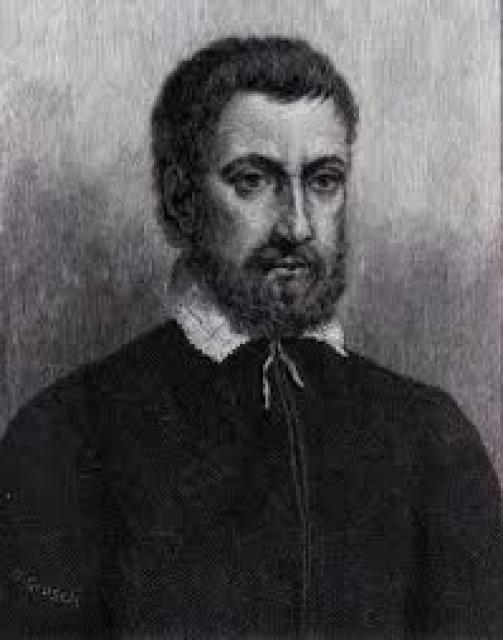
Benvenuto Cellini, an Italian artist, sculptor, and master of goldsmithing, was born on February 13, 1571. He was a prominent figure in the illustrious group of great creators of the Italian Renaissance, often compared to Michelangelo by his contemporaries. While Cellini revered his teacher Michelangelo, he believed that the older artist represented a generation of artists that was fading away, and that there were no equals among his peers.
Early Life and Extraordinary Experiences
Cellini's belief in his own divine destiny was immense. In his autobiography, "The Life," he recounts several events that indicated his exceptional nature. For instance, in his early childhood, Cellini grabbed a scorpion with his bare hands without getting stung. He also claimed to have seen a salamander, a mystical creature, in the fire, but no one else present could see it, signifying it as a special omen. However, these encounters paled in comparison to the remarkable experiences Cellini had in his later years.
Imprisonment and Divine Visits
As Cellini gained fame as an artist, he also became known for his unruly behavior, often finding himself in prison. He spent time in the notorious Castel Sant'Angelo in Rome, where he had wondrous visions. Christ and the Madonna with two kneeling angels appeared to him. He also had prophetic dreams about himself and others. The most extraordinary event happened after his release from prison. A radiant halo appeared around his head, resembling a genuine saint's halo. Cellini described this phenomenon in a solemn tone, stating that people from various backgrounds witnessed this divine radiance when he showed it to them. Interestingly, the further north Cellini traveled (e.g., in France compared to Italy), the more visible the halo became. The damp, dewy mornings, two hours after sunrise, were especially favorable for these observations.
Self-Proclaimed Monarch of Art
Cellini anointed himself as the absolute monarch of art and considered any offense against him as an insult to his greatness. One critic said of him, "He anointed and crowned himself as the absolute monarch of art, and every offense against him becomes an insult to his majesty." Cellini truly believed that he was not only equal to dukes but far more significant than them. On one occasion, while traveling to France, he was supposed to make a stop in Ferrara to visit Cardinal d'Este. A servant of the cardinal met him along the way, urging him to hasten and take a postcoach. Cellini responded that his art was not performed on postcoaches, and he preferred to travel at a leisurely pace with a mounted servant to attend to his personal needs and sufficient money for the journey. The cardinal's messenger arrogantly replied that only duke's sons traveled that way. Cellini retorted that he did not know how duke's sons traveled, as he had never been one, and if the cardinal's servant dared to insult him again, he would not come at all.