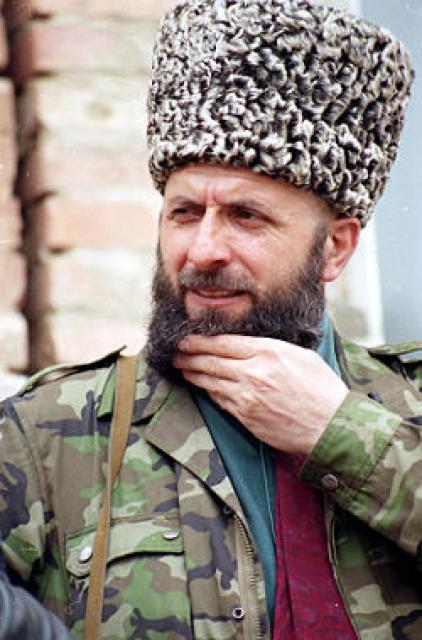
Zelimhan Yandarbiev
 Kazakhstan
- Biography of Zelimkhan Yandarbiev
- Early Life and Literary Career
- Political Career
- International Relations and Assassination
Biography of Zelimkhan Yandarbiev
Zelimkhan Abdulmuslimovich Yandarbiev (September 12, 1952, Kazakh SSR - February 13, 2004, Doha) was a Chechen statesman and active supporter of Chechen separatism. From 1996 to 1997, he served as the acting President of the self-proclaimed Chechen Republic of Ichkeria. He participated in combat operations against Russian forces and was accused of terrorist activities in Russia. He was placed on the Interpol wanted list in 2001 and was listed as a terrorist by the United Nations.
Early Life and Literary Career
Yandarbiev was born on September 12, 1952 in Kazakhstan and later moved to the Chechen-Ingush Autonomous Soviet Socialist Republic. At a young age, he began working as a laborer and bricklayer. After completing his military service in 1972, he worked as an assistant driller in a drilling company. He also attended the correspondence department of the Philosophy Faculty of the Chechen-Ingush State University, which he graduated from in 1981. After university, he worked as a proofreader and later as the head of the production department at the Chechen-Ingush Book Publishing House.
In the 1980s, Yandarbiev became involved in literary activities and held various positions in the Union of Writers of the Chechen-Ingush Autonomous Soviet Socialist Republic. He published several books of poetry and prose during this time. He was also involved in political activities during the period of perestroika and served as the Chairman of the political organization "Bart" ("Consent") in Chechen society.
Political Career
In May 1990, Yandarbiev organized and led the Vainakh Democratic Party, which aimed to create an independent democratic state. He later became the Deputy Chairman of the Executive Committee of the All-National Congress of the Chechen People. He was elected as a deputy in the Chechen Republic of Ichkeria Parliament in 1991 and served as the Chairman of the Committee on Media and Freedom of Speech. He advocated for Chechnya's independence from the Russian Federation.
During the First Chechen War, Yandarbiev actively participated in combat operations on the side of the separatists. In April 1993, he supported President Dzhokhar Dudayev's decision to dissolve the parliament and other government bodies in Chechnya. In 1996, following Dudayev's death, Yandarbiev assumed the role of acting President and Supreme Commander-in-Chief of the armed forces of the Chechen Republic of Ichkeria. He led the Chechen delegation in negotiations with Russian officials to end the hostilities.
After the election of Aslan Maskhadov as the President of the Chechen Republic of Ichkeria in 1997, Yandarbiev joined the nationalist-radical opposition and later supported the opposition Council of Commanders led by Shamil Basayev. He criticized Maskhadov for his perceived softness towards Russia and his reluctance to fully implement Sharia law in Chechnya.
International Relations and Assassination
Yandarbiev sought political support for the separatist cause by traveling to various countries in the Middle East. He was appointed as the personal envoy and representative of Ichkeria in Muslim countries by Maskhadov. He played a role in establishing official recognition of Ichkeria's sovereignty by Afghanistan.
In June 2003, Yandarbiev's name was included in the UN Security Council sanctions list, which required member states to freeze his assets, prevent his entry or transit through their territories, and refrain from providing any material assistance or support to him.
On February 13, 2004, Yandarbiev was killed in a car explosion in Doha, Qatar. The explosive device was planted under his personal jeep. His 13-year-old son, Daud, who was in the car with him, was seriously injured. Two employees of the Russian embassy, Anatoly Belashkov and Vasily Bogachev, were later arrested and convicted for their involvement in the assassination. However, there are other theories suggesting that the assassination may have been a result of internal conflicts among the separatists.
Zelimkhan Yandarbiev's literary works and poetry have been translated into more than 40 languages. He left a significant impact on the Chechen separatist movement and remains a controversial figure in the history of Chechnya's struggle for independence.


