Zoroaster
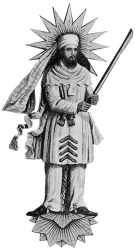
Zoroaster—known in Iranian tradition as Zarathustra—stands at the beginning of one of the world’s oldest living religious traditions. Zoroastrians honor him as the prophet who taught devotion to Ahura Mazda, the Wise Lord, and called people to choose truth and righteousness. Yet the details of his life remain elusive: scholars debate when he lived, where he came from, and how much of the earliest sacred poetry he composed.
A life partly hidden in sacred verse
The oldest source connected to Zoroaster is the Gathas, a collection of seventeen hymns preserved within the Avesta, the sacred texts of Zoroastrianism. The hymns are composed in Old Avestan, a language that appears archaic and difficult to date precisely. They present a speaker addressing Ahura Mazda and wrestling with questions of worship, moral choice, and the struggle between truth and deception.
Later Zoroastrian tradition identifies this speaker as Zarathustra and supplies a fuller account of his life and mission. Modern historians treat those later stories as important religious memory rather than straightforward biography. The date of Zoroaster remains disputed, with many scholars placing him in the second millennium BCE on linguistic grounds, while traditional chronologies and other proposals place him much later. His homeland is also uncertain, though it is often associated with the eastern Iranian or Central Asian world.
Choosing truth and the Wise Lord
In the Gathas, Zoroaster’s teaching centers on Ahura Mazda, whose name means “Wise Lord.” The hymns urge people to make deliberate moral choices, aligning themselves with asha—truth, right order, and justice—rather than druj, deceit and disorder. This emphasis on responsibility gives Zoroastrian worship an ethical dimension: human beings are not passive in the struggle between good and evil but must decide how to act.
The Gathas speak in a poetic, direct voice, addressing the divine and questioning the pressures of society. Their speaker appears to challenge existing religious authorities and seek support from a ruler, Vištāspa, who in tradition becomes an early protector of the faith. The historical circumstances behind these verses are difficult to reconstruct, but they convey the force of a religious reformer calling a community toward a different way of worship and conduct.
A tradition that endured
Zoroastrianism developed over centuries, and its later teachings, rituals, and institutions cannot all be attributed to one founder. The Avesta includes material from different periods, preserved and transmitted orally long before it was written down. Still, the Gathas remain the most direct and distinctive voice associated with Zoroaster.
His influence extends far beyond the uncertain details of his biography. Zoroastrian communities in Iran and across the world continue to revere him as the prophet who revealed the Good Religion. The language of moral choice, truth, and the responsibility to help renew the world has made his teachings enduring. Zoroaster remains both a historical puzzle and a living spiritual presence: a poet-prophet whose oldest surviving words still ask how people should choose to live.