Zurab Zurabishvili
 Russia
- Zurab Zurabishvili: A Georgian Tenor in the Heart of Germany
- From Football Field to Opera Stage
- Audition Triumph and European Success
- Cultural Identity and the Georgian Spirit
- Life in Augsburg and Adjusting to German Etiquette
- Vocal Discipline and Culinary Sacrifices
- Intimacy and Artistic Performance
- Superstitions and Unforeseen Situations
- A Year at the Bolshoi or Stability in Augsburg?
- Beyond the Opera
Zurab Zurabishvili: A Georgian Tenor in the Heart of Germany
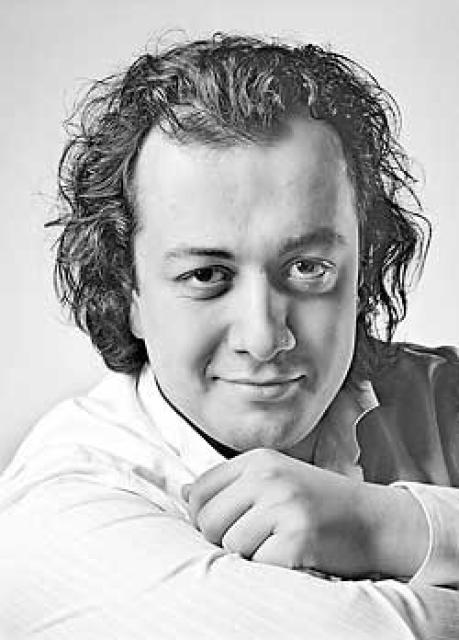
Early Life and Musical JourneyZurab Zurabishvili, born in 1973 in Tbilisi, Georgia, embarked on an extraordinary musical journey that led him to the prestigious Mozarteum University in Salzburg. Despite the country's war-torn past, Zurabishvili's unwavering determination and his father's unwavering support enabled him to pursue his passion.
From Football Field to Opera Stage
Before his musical calling, Zurabishvili excelled as a goalkeeper for a Georgian football team. Additionally, he proved his intellectual prowess by winning the Tbilisi Chess Championship twice and pursuing a degree in physical mathematics. However, it was his vocal talents that ultimately defined his path.
Audition Triumph and European Success
In a competitive audition for the soloist role at the Augsburg Opera House, Zurabishvili triumphed over 79 other tenors. His exceptional vocal abilities, honed by renowned pedagogue Hanna Ludwig, earned him a contract in 2003. Since then, he has performed leading roles in operas such as "Macbeth," "Romeo and Juliet," and "The Gypsy Baron."
Cultural Identity and the Georgian Spirit
Zurabishvili proudly embraces his Georgian heritage, emphasizing the musicality and warmth of his people. Despite the prominence of surnames like "Dzhugashvili" and "Shevardnadze" in Europe, Zurabishvili aspires to showcase the cultural richness of Georgia, exemplified by figures like Chavchavadze and Rustaveli.
Life in Augsburg and Adjusting to German Etiquette
While grateful for the opportunities he found in Augsburg, Zurabishvili acknowledges the cultural differences between Georgia and Germany. He observes that the spontaneous and sociable nature of Georgians contrasts with the more structured and planned approach to social gatherings in Germany.
Vocal Discipline and Culinary Sacrifices
As a tenor, Zurabishvili adheres to a strict vocal regimen, including avoiding certain foods and beverages. He attributes his vocal health to moderation and a balanced diet that excludes garlic, a culinary staple in Georgian cuisine.
Intimacy and Artistic Performance
Zurabishvili acknowledges the controversial topic of intimacy before performances. While recognizing individual preferences, he emphasizes the potential impact on vocal performance for tenors. He believes that engaging in intimacy should ideally take place after a performance to ensure optimal vocal quality.
Superstitions and Unforeseen Situations
Despite his non-superstitious nature, Zurabishvili acknowledges the importance of pre-performance routines, such as securing an hour of sleep on the day of a performance. He also recalls amusing incidents on stage, including losing his sword during a performance of "Carmen" and forgetting the lyrics, leading to an impromptu improvised performance in Georgian.
A Year at the Bolshoi or Stability in Augsburg?
Faced with the hypothetical choice between a single performance as a principal soloist at the renowned Bolshoi Theatre or a stable, prosperous year in Augsburg, Zurabishvili unhesitatingly chooses the Bolshoi, highlighting his unyielding passion for the art form.
Beyond the Opera
In addition to his musical pursuits, Zurabishvili is fluent in five languages and continues to expand his linguistic horizons. He values the diversity and cultural exchange that comes with living in a globalized world.