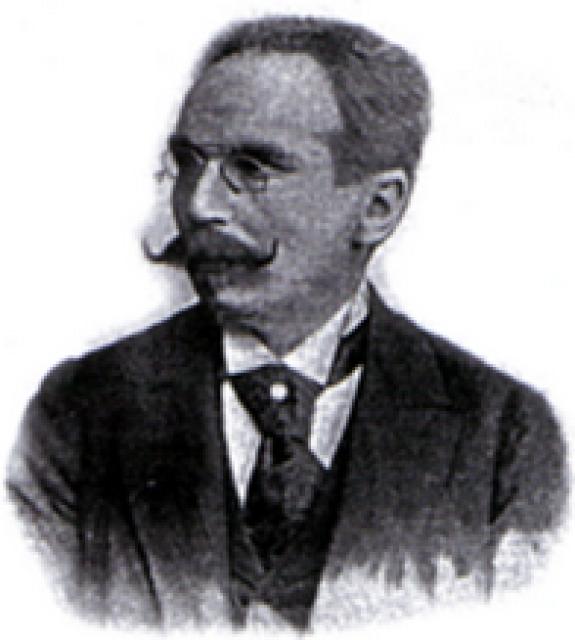
Zygmunt Gorgolewski
 Poland
- Early Life and Education
- Architectural Career in Berlin
- Restoration and Renovation Projects
- Landmark Architecture in Lwów
- Director of the State Industrial School in Lwów
- The Lwów Opera House
- A Remarkable Building
- Tragic Demise and Legacy
Early Life and Education
Zygmunt Gorgolewski, one of the most renowned Polish architects of the 19th century, was born in Poznań, Poland. After completing his studies at the local high school, he embarked on his architectural journey by enrolling in the prestigious Royal Building Academy in Berlin, where he excelled in his studies of architecture and engineering from 1866 to 1871.
Architectural Career in Berlin
Gorgolewski's exceptional talent was evident during his academic years, as he participated in the architectural competition for the design of a conservatory in Berlin, which was later accepted as his diploma project. Upon graduating, he remained at the academy as an assistant in the department of architectural design, serving as a faculty member for seven years.
Concurrently with his teaching responsibilities, Gorgolewski actively pursued practical architectural projects. His first major undertaking was the Stadtbahn railway station in Berlin, where he held the position of deputy head of construction. Throughout his tenure in Berlin, he participated in various architectural competitions, leaving an indelible mark on the city's landscape.
Notable structures designed by Gorgolewski in and around Berlin include the Wilhelm I Bridge, a higher women's school, the Society of Friends of Science building, residences opposite the Polish Theater in Poznań, district and county courts in Opole and Olsztyn, and state prisons in Świdnica and Królewska Huta. Additionally, he was involved in the expansion of Bad Oeynhausen, a spa town in Westphalia.
Restoration and Renovation Projects
Gorgolewski's architectural repertoire extended beyond new constructions to include restoration and renovation projects. He was responsible for the restoration of royal palaces in Berlin and Kiel, the expansion of university clinics in Halle and Bonn, and the design of a protestant church in Berlin and a country estate named Belle Vue. His early travels to Krakow, Lwów, Kyiv, and Vilnius, as well as to Paris, Italy, Germany, and Austria, exposed him to the Renaissance architectural principles that would later influence his own design style.
Landmark Architecture in Lwów
One of Gorgolewski's most significant contributions to Polish architecture was his involvement in the construction of the Galician Sejm building in Lwów. Although his design was highly praised, it was ultimately not selected for execution.
In the 1880s, Gorgolewski's reputation as a renowned architect grew. He was awarded the esteemed Honorary Diploma for Architecture at the Polish Art Exhibition in Krakow in 1887. In recognition of his exceptional contributions, he was bestowed the title of government advisor on architecture and construction on the occasion of the emperor's 50th jubilee.
Gorgolewski served as a juror on prestigious architectural competitions, including the 1892 theater design competition in Krakow, which was won by Jan Zawiejski, who would later become Gorgolewski's competitor in Lwów.
Director of the State Industrial School in Lwów
In 1893, Gorgolewski was appointed director of the State Industrial School in Lwów at the invitation of the Galician provincial government. He played a pivotal role in raising the school's standards by recruiting renowned sculptors, artists, and architects to its faculty.
As a dedicated professional, Gorgolewski supervised the construction of primary schools throughout Galicia, ensuring their quality. He also served as a curator of vocational education, implementing measures to enhance the material resources of schools and promoting woodworking as a form of artistic expression in many schools in the Carpathian region.
In his capacity as a member of the Academic Council of the Polytechnic Institute in Lwów, Gorgolewski provided valuable advice on the construction of the Museum of Artistic Handicrafts, the Church of St. Elizabeth, and the restoration and expansion of the Polytechnic building.
The Lwów Opera House
In 1894, Gorgolewski emerged victorious in the competition for the design of the Palace of Arts for the Galician Provincial Exhibition in Lwów's Stryj Park. He also oversaw the construction of the main gate and several pavilions for the exhibition, which have since been demolished.
In 1896, an architectural competition was announced for the construction of a new Municipal Theater in Lwów, which drew the attention of the renowned firm of Fellner & Helmer, responsible for designing over 40 theaters across Europe. Despite the presence of such formidable competitors, Gorgolewski's design was unanimously selected as the winner by a prestigious jury in Leipzig.
Gorgolewski's winning proposal involved a bold engineering solution: the covering of the Poltva River with reinforced concrete vaults to create a stable foundation for the theater in the densely populated city center.
A Remarkable Building
Construction of the Municipal Theater commenced in 1897 under Gorgolewski's personal supervision. The project involved the collaboration of renowned firms from Lwów and abroad, and was completed in the remarkably short time span of three years and four months.
The Municipal Theater, later renamed the Lwów Opera House, was hailed as a triumph of architectural and engineering ingenuity. In recognition of his extraordinary achievement, Gorgolewski was awarded the Knight's Cross of the Order of the Iron Crown, Third Class, with the personal signature of the emperor.
The theater's grand opening took place on October 4, 1900. However, shortly after its inauguration, the ground beneath the building began to subside at an alarming rate. Water from the river seeped into the basement, flooding the engine room and causing cracks in the walls. The theater was in imminent danger of collapse.
Despite the gravity of the situation, Gorgolewski managed to stabilize the structure, preventing a catastrophic failure. The subsidence eventually ceased, leaving the theater intact.
Tragic Demise and Legacy
On July 6, 1903, Zygmunt Gorgolewski unexpectedly succumbed to a heart attack. His sudden and unexplained death fueled a legend among the citizens of Lwów that he had committed suicide due to the perceived threat of the theater's imminent collapse.
Despite widespread speculation, Gorgolewski's burial site in the modest family tomb in the prestigious Lychakiv Cemetery, typically reserved for non-suicides, casts doubt on the validity of this legend. However, the story continues to resonate with many Lwów residents to this day, a testament to the enduring legacy of this exceptional architect.
The image of the Lwów Opera House, Gorgolewski's architectural masterpiece, adorns the Ukrainian 20 hryvnia banknote, a lasting tribute to his profound impact on the architectural heritage of Lwów and beyond.


