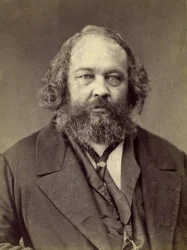
A. Kollontaĭ
Early life and political awakening
Alexandra Mikhailovna Kollontai was born in St. Petersburg on 19 March 1872 into a prosperous family. Her father was a general in the Russian army, and her mother came from a family of Finnish merchants. Educated at home, Kollontai grew up amid privilege but became increasingly concerned with the harsh conditions faced by workers and peasants. After marrying engineer Vladimir Kollontai, she travelled in Europe and studied social questions, experiences that drew her toward Marxism.
By the turn of the century, she had joined the Russian Social Democratic Labour Party and was writing and organizing on behalf of the working class. She became especially interested in the lives of women workers, arguing that economic dependence and domestic expectations shaped women’s opportunities. Political activity brought surveillance and exile; she spent years abroad, moving among socialist communities and working with both Bolshevik and Menshevik circles before aligning herself with the Bolsheviks.
Revolution and women’s rights
Kollontai returned to Russia after the February Revolution of 1917 and became a prominent Bolshevik organizer. She supported the October Revolution and served as people’s commissar for social welfare in the new Soviet government, one of the first women to hold a ministerial post in a modern state. Her work included efforts around public welfare and the legal position of women.
She helped establish the Zhenotdel, the Communist Party’s women’s section, which organized campaigns addressing literacy, employment, childcare, and women’s participation in public life. Her essays and fiction explored marriage, sexuality, motherhood, and women’s independence. Kollontai’s arguments about relationships and social change were unusually bold for her time, and they sparked both interest and controversy. She later joined the Workers’ Opposition, criticizing the growing power of party bureaucracy, but the faction was suppressed.
Diplomatic career and legacy
In 1923, Kollontai entered Soviet diplomatic service, beginning a long career abroad. She represented the Soviet Union in Norway and Mexico and served in Sweden from 1930 to 1945, becoming ambassador in 1943. During the Second World War, she took part in negotiations connected with peace between the Soviet Union and Finland. Her diplomatic success offered a rare path to influence for a woman in a political system that had narrowed her role at home.
Kollontai retired for health reasons and died in Moscow on 9 March 1952. She is remembered as a revolutionary, writer, and advocate for women’s emancipation, as well as a pioneering woman diplomat. Her life linked socialist organizing, debates about gender and family, and the practical work of international diplomacy.