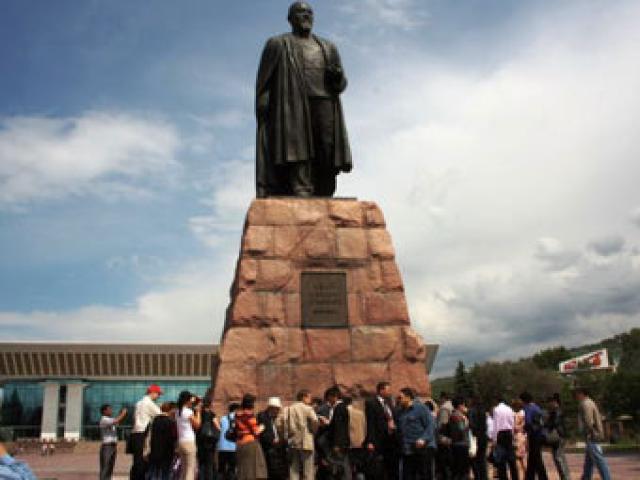
Abay Kunanbaev
 Kazakhstan
Biography of Abai Kunanbayev
Abai Kunanbayev was a Kazakh poet, philosopher, composer, enlightener, thinker, and public figure. He is known as a great poet, writer, and reformer of Kazakh literature. Abai was born on August 10, 1845, in the Chingiz Mountains of the Semipalatinsk region. He was the son of one of the four wives of Kunanbay, the elder sultan of the Karkaralinsk district. Abai came from an aristocratic family, and his grandfather and great-grandfather were rulers and biys in their tribe.
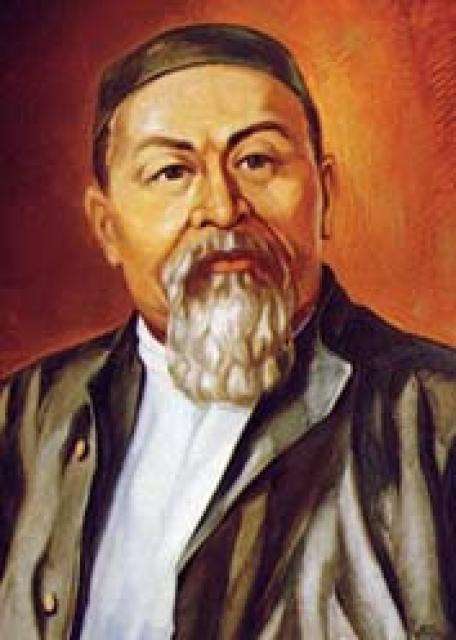
Abai was fortunate to have a loving and nurturing family. His mother, Ulzhan, and grandmother, Zere, were incredibly charming and talented individuals. It was his mother who gave him the nickname "Abai," meaning "cautious, thoughtful," instead of the name given by his father, "Ibrahim." This name stuck with him throughout his life and became his legacy.
Abai's exposure to oral poetry and home education began in his early childhood and continued in the madrasah of Imam Ahmed-Riza. He also attended a Russian school and started writing poetry by the end of his five years of education. At the age of 13, Abai started assisting his father in administrative duties as the head of the tribe. However, he gradually became disillusioned with administrative and political activities, leading him to completely dedicate himself to self-education at the age of 28.
It was not until he turned 40 that Abai realized his calling as a poet and a citizen. He put his name under his poem "Summer" (previously he attributed his works to his friend Jantasov Kokpai). His interaction with Russian exiles, such as E.P. Mikhailis, N. Dolgopolov, and S. Gross, played a significant role in unlocking his potential. Abai's turn towards Russian culture, which had undergone a period of "storms and pressure" in the 19th century, was natural because poetic language was highly valued in Eastern tradition. Abai was deeply moved by the poetry of Pushkin, Lermontov, Goethe, and Byron. He skillfully translated their works into Kazakh, capturing the spirit of the original poems and adapting them to the worldview of his compatriots.
For 20 years, Abai's genius flourished in various fields. He gained tremendous authority and unprecedented popularity in the steppe. Akyns, singers, composers, and talented young people flocked to him, and he became the center of a social, philosophical, and literary school. However, as a powerful thinker, Abai also faced intense envy and hostility, manifested in various destructive forms. The final blows of fate were associated with the deaths of Abdrakhman and Magavi. He rejected medical treatment and willingly sentenced himself to death. He was buried near his winter quarters in the Zhidebai Valley, near the Chingiz Mountains, at the age of 60.
Abai's Philosophy and Contributions
Abai's works, particularly his collection of "Words of Wisdom," played a significant role in transforming the culture of his people. He introduced a stream of new ideas, forms, and stories from various cultures and traditions, integrating Kazakh culture into the world of classical civilizations and enriching their spiritual experiences. He drew inspiration from Arab culture, particularly the Quran and One Thousand and One Nights, as well as Hellenistic traditions from Aristotle and Alexander the Great. The millennia-old Persian culture and literature, deeply rooted in Abai's family tradition, also influenced his artistic development.
Abai's immersion in Russian culture, which underwent its own period of "storms and pressure" in the 19th century, was a natural consequence of his poetic sensibility. He found resonance in the works of Russian poets and authors such as Pushkin, Lermontov, and Gogol. In his translations, Abai captured the essence of their verses and adapted them to the sensibilities of his fellow countrymen.
Abai's contribution to Kazakh culture cannot be underestimated. He revolutionized the Kazakh literary tradition, introducing new genres, styles, and themes. His works resonated deeply with the people, inspiring a new generation of talented writers and thinkers. Abai believed that education, the mastery of languages, and the development of individual talents were essential for the progress of society. He emphasized the importance of moral example and advocated for the preservation and development of the Kazakh language, while also promoting the study of other languages and cultures.
Despite facing numerous obstacles and enemies, Abai's words and ideas continue to resonate with Kazakh people. His works have become an integral part of Kazakh national consciousness, inspiring generations of poets, writers, and intellectuals. Abai's legacy is a testament to the power of literature and the enduring impact of a great thinker and poet on a nation's cultural development.