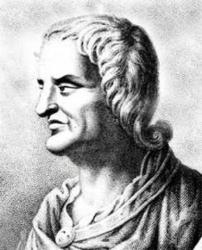
Paul Valery
 France
Biography of Paul Valéry
Paul-Ambroise Valéry (1871-1945) was a French poet, essayist, and critic who aimed to create "mathematically pure" poetry that was free from traditional content, associations, and values. He was born on October 30, 1871, in the city of Sète on the Mediterranean coast of France. His father was Corsican, and his mother came from an ancient Genoese family.
Early Career and Literary Circles
Upon the advice of his friend, writer Pierre Louÿs, Valéry began publishing essays and poems in the symbolist style while still a student at the Faculty of Law at the University of Montpellier. After moving to Paris, he served as a civil servant in the Ministry of War from 1895 to 1900, and later as personal secretary to Édouard Lebey, the director of the Gavas agency. Valéry regularly attended literary gatherings, particularly those of Stéphane Mallarmé. During this time, he worked on one of his most significant critical works, "Introduction to the Method of Leonardo da Vinci" (1895). In 1897, Valéry published the essay "A Methodical Conquest," in which he analyzed the reasons for Germany's growing influence in Europe.
Turning Point and Return to Poetry
Experiencing a mental crisis in 1892, the nature of which Valéry did not disclose, he withdrew from literary life and immersed himself in the study of mathematics. Only in 1917 did Valéry return to poetry with the publication of the poem "The Young Parc" (La Jeune Parque) – a kind of monologue-reflection that conveys the awakening of the soul to self-awareness and sensual life. Originally intended to be no longer than fifty lines, the final version consists of about five hundred lines.
Thoughts and Impressions
Valéry's daily recordings of thoughts and impressions, following a self-imposed rule, accumulated over many years and resulted in the publication of 29 volumes of facsimile editions called "The Notebooks" (Les Cahiers) from 1957 to 1961.
Later Years and Legacy
In 1925, Valéry was elected to the French Academy. As a person of modest means, he felt the need for literary earnings and public lectures after losing his secretarial position with Lebey's death in 1922. Valéry wrote numerous prefaces to works by various authors, commissioned pieces (such as the dialogue "The Fix Idea" - L'Idée fixe), and published essays in which he developed a "constructivist" theory of poetry similar to that of Edgar Allan Poe, denying the role of inspiration.
Other significant works by Valéry include the Socratic dialogues "Eupalinos, or the Architect" (1924) and "The Soul and Dance" (1924); the poetry collection "Charms, or Poems" (1922); and a series of episodic fragments dedicated to a peculiar, fantastical character named Monsieur Teste (Monsieur Teste, fully published in 1946).
Throughout Valéry's oeuvre, the theme of seeking the "pure self" (le moi pur) runs, a path that involves gradually liberating oneself from everything subject to biological changes and decay. Valéry passed away in Paris on July 20, 1945.