Abba Kovner
 Israel
- Abba Kovner: A Witness to the Holocaust and a Fighter for Justice
- Vilnius Ghetto and Resistance
- Partisan Warfare and Post-War Activities
- Witness to History
- Literary and Cultural Contributions
- Preserving Jewish Heritage
- Family Ties and Legacy
Abba Kovner: A Witness to the Holocaust and a Fighter for Justice
Early Life and EducationAbba Kovner was born on March 14, 1918, in Sevastopol, Crimea, to a pharmacist father. In 1926, the family moved to Lithuania, where Kovner attended a Hebrew-language gymnasium in Vilnius. It was during this time that he joined the Zionist youth movement Ha-Shomer Ha-Tzair.
Vilnius Ghetto and Resistance
In January 1942, the United Partisan Organization (FPO) was established in the Vilnius Ghetto, with Kovner as one of its leaders. The FPO aimed to organize self-defense, sabotage, and escape routes for ghetto residents.
When the FPO's commander, Itzik Wittenberg, was forced to surrender to the Nazis in July 1943, Kovner took over leadership of the underground. In September 1943, during the liquidation of the ghetto, Kovner and a group of fighters escaped and joined the Rudniki Forest Jewish partisan unit.
Partisan Warfare and Post-War Activities
With the Rudniki Forest unit, Kovner commanded a brigade called "Nekama" (Revenge). He also met his future wife, Vitka Kempner. After the war, Kovner returned to Europe and organized a group that sought retribution against Nazi perpetrators. His group is believed to have killed around 400 individuals.
Witness to History
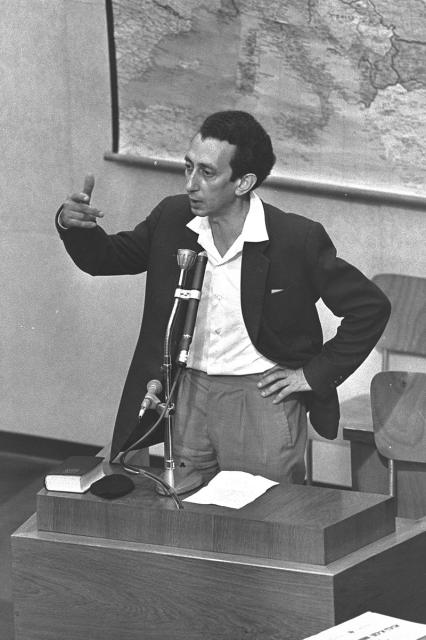
In 1961, Kovner testified at the trial of Nazi war criminal Adolf Eichmann. He recounted his knowledge of Eichmann's role in the Holocaust, which he had first learned of in 1941 from a German soldier.
Literary and Cultural Contributions
Kovner's poetry reflects his experiences during the Holocaust and his commitment to the Jewish people. His book of prose, "The Book of Testimony," documents the lives of partisans in Lithuania. He served as chairman of the Israeli Writers' Association and was involved in establishing the Museum of Jewish Resistance in Warsaw and the Diaspora Museum in Tel Aviv.
Preserving Jewish Heritage
In 1983, Kovner collaborated on a multi-volume project to collect and publish Yiddish folk songs under the auspices of the Hebrew University of Jerusalem.
Family Ties and Legacy
Abba Kovner was the cousin of Meir Vilner, an Israeli communist politician. Kovner's legacy continues through his writings, his role in preserving Jewish history, and his unwavering commitment to fighting against oppression and injustice.