Abdul Calam
 India
IndiaBiography of Abdul Kalam
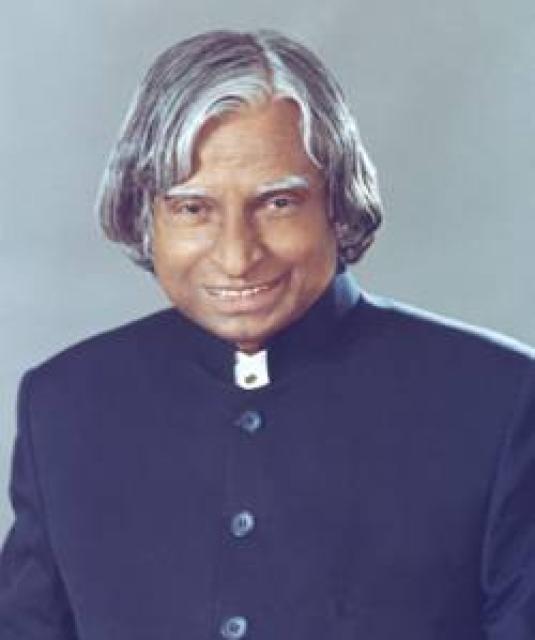
Abdul Kalam was born on October 15, 1931, in a middle-class Tamil family in the Rameswaram district of Madras (now Chennai). His father, Jainulabdeen Marakayar, earned a living by renting boats to local fishermen, while his mother, Ashiamma, had a formal education. Growing up in a large Indian family, Kalam was surrounded by kindness and wisdom. As a child, he was introverted and loved reading. Despite the limited availability of books, Kalam read anything he could get his hands on, a fact that was noted by his neighbors.
Kalam's vegetarianism initially stemmed from the financial constraints of his family, but even after becoming successful, he maintained it as a personal practice. He believes that he inherited honesty and self-discipline from his father, while his belief in perfection and kindness was inherited from his mother.
In 1950, Kalam enrolled at St. Joseph College in Trichi, where he obtained a bachelor's degree. In 1954, he joined the Madras Institute of Technology (MIT). In 1959, Abdul Kalam became a senior scientific officer in the Department of Technological Development and Production (Air). In 1962, INCOSPAR decided to establish the Thumba Equatorial Rocket Launching Station (TERLS). On November 21, 1963, the first Indian rocket, Nike-Apache, was successfully launched from TERLS. By November 20, 1967, 75 Rohini rockets had been launched from TERLS.
In 1968, the Indian Rocket Society was established, and in 1972, Abdul Kalam led the successful testing of a re-entry vehicle under the society's auspices. In 1976, his father passed away at the age of 102, followed shortly by his mother.
On July 18, 1980, under Kalam's leadership, the first Indian satellite, SLV-3, was launched. Six months later, on January 25, 1981, the government awarded Kalam the Padma Bhushan. On May 31, 1981, the SLV-3-D was launched. In February 1982, Kalam was appointed as the Director of Nuclear Research.
On July 27, 1983, the Integrated Guided Missile Development Program (IGHDP) was initiated. On June 26, 1984, the "Devil Rocket" was launched for a trial flight. After the nuclear tests, Kalam was dubbed the "Missile Man" by the Bombay Times. In his poem "Tumult," he questions whether he is expanding the realms of science or creating weapons of destruction.
On August 13, 1985, the foundation stone of the Research Centre Imarat (RCI) was laid. In September 1988, the second Prithvi missile was launched, followed by the launch of Agni on May 22, 1989. On January 26, 1990, Kalam was awarded the Padma Vibhushan.
In 1990, he received an honorary Doctorate of Science from Jadavpur University, and in 1991, he received the same honor from the Indian Institute of Technology in Bombay. In 1997, Abdul Kalam was awarded the Bharat Ratna, India's highest civilian award.
Kalam made significant contributions to India's space program, successfully launching the Rohini satellite into orbit. As a leader in various scientific and technological organizations, he actively promotes science and technology development in the country. He serves as the Chairman of the Technology Information, Forecasting, and Assessment Council (TIFAC), as well as the Chief Scientific Advisor to the Government of India and a member of the Cabinet. Kalam's expertise extends to international cooperation and technological development, and he is highly regarded in the scientific community for his contributions and guidance.