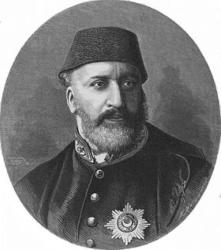
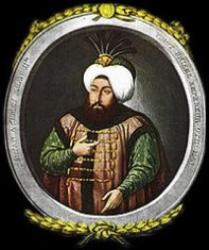
Abdul Hamid II
 Turkey
- Sultan of the Ottoman Empire: Abdülhamid II
- Ascension to the Throne
- Suppression of the Constitution and Consolidation of Power
- The "Sick Man of Europe"
- The Armenian Massacres
- The Young Turk Revolution
- Legacy
Sultan of the Ottoman Empire: Abdülhamid II
Abdülhamid II, the sultan of the Ottoman Empire and the 99th caliph, reigned from 1876 to 1909. He was the last absolute ruler of the Ottoman Empire. He attempted to establish a sole-rule regime and preserve the empire's territorial integrity, relying on the ideology of pan-Islamism. During his reign, the rapidly weakening and disintegrating Ottoman Empire was ultimately reduced to a semi-colony of European powers.
Ascension to the Throne
Abdülhamid II ascended to the throne on August 31, 1876, after his brother, Murad V, who had reigned for just three months, was deposed due to efforts by the leaders of the "Young Ottomans" and Midhat Pasha. Upon his accession to the throne, Abdülhamid II pledged to promulgate a constitution and hold parliamentary elections.
Suppression of the Constitution and Consolidation of Power
However, Abdülhamid II's initial promises were soon abandoned as he embarked on a path to suppress the constitution and consolidate absolute monarchical power. He dismissed the parliament, formally dissolved the constitution in 1878, and established a Hamidian regime characterized by despotism, censorship, and secret police.
The "Sick Man of Europe"
Under Abdülhamid II, the Ottoman Empire continued to decline, earning the moniker "the Sick Man of Europe." The empire lost territories to European powers and Balkan states, including Bosnia and Herzegovina to Austria-Hungary, Cyprus to Britain, and parts of Thessaly and Epirus to Greece.
The Armenian Massacres
The reign of Abdülhamid II was marred by the Armenian Massacres, which took place between 1894 and 1896. The massacres resulted in the deaths of hundreds of thousands of Armenians and drew widespread international condemnation.
The Young Turk Revolution
Despite Abdülhamid II's repressive rule, opposition to his regime grew within the military and intellectual circles. In 1908, the Young Turk Revolution forced Abdülhamid II to reinstate the constitution and establish a new government. He was deposed in 1909 and died in 1918.
Legacy
Abdülhamid II's legacy is complex and controversial. He was both a reformer and a tyrant, a champion of pan-Islamism, and an oppressor of non-Muslims. His reign marked the decline of the Ottoman Empire, which was finally dismantled after World War I.