Abdul-Vakil Muttawakil
 Afghanistan
- Abdul Wakil Mutawakil: A Prominent Afghan Statesman
- Early Political Career
- Role in the Saur Revolution and Soviet Intervention
- Ministerial and Diplomatic Appointments
Abdul Wakil Mutawakil: A Prominent Afghan Statesman
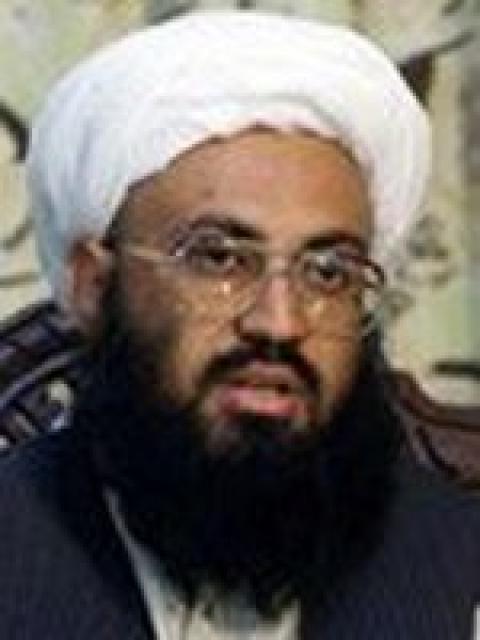
Abdul Wakil Mutawakil is an Afghan statesman who has played a significant role in Afghan politics. Born into a Pashtun family, Mutawakil is also fluent in Dari, a language commonly spoken by urban Pashtuns in Afghanistan. He is a relative of Babrak Karmal, his cousin from his mother's side, and studied at the university alongside his brother, Mahmoud Baryalai. Mutawakil completed his education at the prestigious "Habibiya" high school in 1964 and graduated from the Economics Faculty at Kabul University in 1971.
Early Political Career
Mutawakil joined the People's Democratic Party of Afghanistan (PDPA), specifically the "Parcham" faction, in 1965. He considered himself a member of the party as early as 1964, even before its official formation. During the period of 1969 and 1970, he briefly faced arrest as a participant in youth protests. In 1969, he was a defendant in a trial that also included Najibullah, the future president of Afghanistan. Mutawakil served in the military from 1973 to 1974. From 1977, he became a member of the Central Committee of the PDPA.
Role in the Saur Revolution and Soviet Intervention
After the PDPA came to power through a military coup, known as the Saur Revolution, in 1978, Mutawakil became a member of the Revolutionary Council and the Secretary-General of the Ministry of Foreign Affairs. However, in July 1978, like several other leaders of the "Parcham" faction, he was sent on a diplomatic mission and became Afghanistan's ambassador to the United Kingdom. In October of the same year, he was dismissed from his post and went into exile.
Mutawakil returned to Afghanistan in December 1979 alongside Soviet forces. He participated in the occupation of the Afghan army's General Staff building during the overthrow of Hafizullah Amin's regime. According to Soviet memoirists, it was believed that Mutawakil personally executed one of Amin's closest allies, General Muhammad Yaqub. General KGB Yuri Drozdov recalled, "The committee members and special forces quickly eliminated the guards, but Chief of the General Staff Yaqub managed to barricade himself in one of the rooms and began calling for reinforcements using the radio, primarily relying on the 444th Commando Brigade. However, no one rushed to his aid, and by midnight, realizing the futility of further resistance, he surrendered to the mercy of the victors. No mercy was shown. In the capture group was an Afghan - one of the "Parcham" officials, according to some sources, Abdul Wakil, who, on behalf of the party and the people, read out a sentence to the "traitor" Yaqub and then personally shot the former Chief of the General Staff with a pistol."
Ministerial and Diplomatic Appointments
From 1980 to 1984, Mutawakil served as the Minister of Finance. Between 1984 and 1986, he became Afghanistan's ambassador to Vietnam. In 1986, after the rise of Najibullah's government, Mutawakil was appointed as the Minister of Foreign Affairs, a position he held until 1992. He also became a member of the Politburo of the Central Committee of the PDPA. From 1990 to 1992, he served as a member of the Executive Bureau of the Central Council of the Party of the Homeland, the successor to the PDPA.
Mutawakil led Afghanistan's delegation in the Afghan-Pakistani negotiations in Geneva. According to Soviet diplomat Nikolai Kozyrev, Mutawakil, as a Pashtun, initially hesitated to sign the Afghan-Pakistani agreement in the spring of 1988, which mentioned the "internationally recognized borders between the two countries" (referring to the Durand Line that divided the Pashtun population). However, even the decision of the PDPA's Politburo did not persuade Mutawakil. Only with strong pressure from the Soviet side, including the threat that Prime Minister Sultan Ali Keshtmand (who was Hazara and less concerned with Pashtun issues) would sign the agreement if Mutawakil refused, did the Minister eventually put his signature on the document. Kozyrev recounted that the first deputy minister of foreign affairs, Yuly Vorontsov, flew urgently from Moscow. Vorontsov had a long conversation with Mutawakil, which lasted for 7 or 8 hours. Finally, Vorontsov despaired and said, "That's it, tomorrow I'll bring Keshtmand, and we'll take Mutawakil back to Moscow." Later that night, Vorontsov met Mutawakil again, and the Afghan statesman appeared pale and visibly distressed. The agreements were ultimately signed.