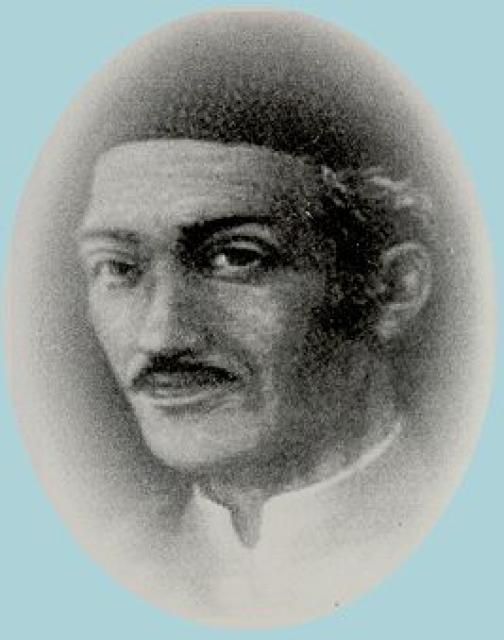
Abdullah Abdul-Kadir
 Malaysia
- Abdullah Munsyi: Father of Modern Malay Literature
- Early Life and Collaborations
- Literary Contributions
- Stylistic Influences and Themes
Abdullah Munsyi: Father of Modern Malay Literature
Abdullah Munsyi, also known as Abdullah the Teacher, is celebrated in Malaysia as the father of contemporary Malay literature. Born the son of a merchant with Arab and Tamil ancestry, Munsyi's early life was shaped by his diverse background.
Early Life and Collaborations
Munsyi's role as a scribe for Thomas Stamford Raffles, the founder of Singapore, ignited his interest in language and literature. He dedicated himself to teaching Malay to Christian missionaries and Indian sepoys, and assisted British scholars in their research on Malaya.
Literary Contributions
Munsyi's literary output was prolific and influential. He was the first to publish an abridged version of the "Sejarah Melayu" (Malay Annals) in 1840 and translated the Tamil "Panchatantra" into Malay. His original works include "Shair tentang Kebakaran di Singapura" (Poem on the Fire in Singapore, 1830), "Hikayat Pelayaran Abdullah" (Abdullah's Travelogue, 1838), "Dawah al-Qulub" (Invitation to the Hearts, 1883), and "Hikayat Abdullah" (History of Abdullah, 1849).
Stylistic Influences and Themes
Munsyi's works are characterized by their vibrant and descriptive Malay language, influenced by the literary style of the "Sejarah Melayu." They reflect a blend of traditional Malay storytelling and modern rational thought. Munsyi promoted pragmatism and urged his readers to embrace reason in their daily lives.