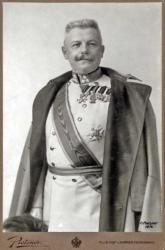
Abraham Buford
 USA
USA- Biography of Abraham Buford
- Choosing Sides
- Confederate Service
- Promotion and Battles
- Actions with Forrest
- Later Years and Tragic End
Biography of Abraham Buford
Abraham Buford was born on January 18, 1820, in a wealthy landowner's family in Woodford, Kentucky. He graduated from the United States Military Academy at West Point in 1841 and served as a lieutenant in the American-Mexican War. After that, he served on the frontier until his retirement in 1854. Buford was a man of immense size and exceptional physical strength. He had a natural talent for being a soldier and greatly valued discipline in all aspects of his life.

Choosing Sides
Buford was a prosperous cattle rancher before the war, which caused him to struggle with deciding which side to support. His two cousins fought for the Union, and his home state of Kentucky was occupied by federal troops. Joining the Confederacy would mean losing his entire estate. However, during John Morgan's raid in Kentucky in 1862, Buford made his final decision and joined the Confederate Rangers in Georgetown.
Confederate Service
Buford was appointed as a colonel and given permission to recruit his own cavalry unit. With five thousand fresh recruits, Buford joined General Bragg's army and provided cover for their retreat from the battlefield in Perryville. Upon Bragg's arrival in Knoxville, Buford's cavalry was ordered to dismount and transfer all their horses to the artillery. Buford protested, but when his concerns were ignored, he turned in his command and lodged a complaint against Bragg and Kirby Smith with President Davis in Richmond.
Promotion and Battles
President Davis recognized Buford's achievements and promoted him to brigadier general in September 1862. Buford was given command of the 3rd Cavalry Brigade, which consisted of three Kentucky cavalry regiments (Crossland, Thompson, and Shacklett) and one Alabama cavalry regiment. The brigade participated in the Vicksburg campaign, fighting under General Loring at Champion Hill and suffering defeat against Grant's forces. They then joined Joe Johnston in Mississippi and fought against Sherman as he advanced towards Vicksburg.
Actions with Forrest
In the spring of 1864, Buford's cavalry joined forces with Forrest in Tupelo and fought together in Tennessee and southern Kentucky. During this operation, Buford captured enough horses and weapons to adequately equip his soldiers. Forrest moved from Jackson towards the federal Fort Pillow, ordering Buford to block Columbus and Paducah with five hundred men. Buford successfully completed the task, preventing several Union columns rushing to aid the doomed Fort Pillow garrison. In the battles near Paducah, Buford captured all the federal artillery without suffering any losses.
Later Years and Tragic End
After defeating Union General Smith's cavalry two months later, Buford forced the federals to retreat to Memphis after a bloody battle that resulted in the loss of over four hundred Confederate soldiers. Following unsuccessful clashes with General Wilson's forces, Buford fell back to Georgia and fought bravely in the rearguard during Hood's retreat from Nashville. After General Lee's surrender, Buford's brigade laid down their arms in Gainesville, Tennessee. Buford returned home and resumed his horse-breeding activities. Interestingly, after the war, Buford developed a habit of naming his best horses after his fellow comrades in battle.
Tragically, Buford's only son died unexpectedly, and neither he nor his wife ever recovered from the loss. His wife passed away shortly after, and Buford, unable to find meaning in life and never fully reconciled with the war's defeat, took his own life on June 9, 1884.