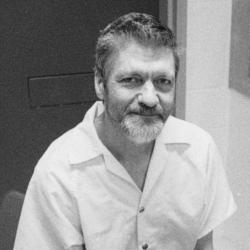
Abu Abbas
 Iraq
Iraq- Biography of Abu Abbas
- Early Years in the PFLP
- Training in the Soviet Union
- Establishing the Palestine Liberation Front (PLF)
- Terrorist Activities
- Later Years and Controversies
Biography of Abu Abbas
Abu Abbas, also known as Mohammed Abbas, was the leader of the "Palestine Liberation Front" (PLF). He was born in 1948 in the Yarmouk refugee camp in Syria, where his family had moved from Tyre, near Haifa, after the declaration of Israel's independence. After completing school, Abu Abbas enrolled in the Arabic Literature faculty at Damascus University. However, his life quickly changed when he joined the first Palestinian terrorist group, the Popular Front for the Liberation of Palestine (PFLP) in 1967.
Early Years in the PFLP
During this time, many Palestinian leaders came to the realization that they would not be able to defeat the Jewish state on the battlefield, despite the active financial and military support from the Soviet Union. It was then that Vadim Khaddad, an Arab Christian, and his classmate Georges Habash, also an Arab Christian, proposed using terrorism as a means to achieve victory. They founded their own group, the PFLP, which became the starting point for many well-known international terrorists, including Abu Abbas.
Training in the Soviet Union
According to Israeli sources, in the late 1960s, Abu Abbas caught the attention of the Soviet KGB. By that time, the PFLP had split into two factions: the PFLP led by Georges Habash and the PFLP-General Command led by Ahmed Jibril. In 1971, Abu Abbas traveled to the USSR, where he underwent "special training" at the KGB training base in Solnechnogorsk, near Moscow. It is noteworthy that Abu Abbas himself did not deny that he learned the trade of a professional terrorist near Moscow. In an interview with the Russian newspaper "Vremya Novostey" on the eve of the Gulf War, he openly discussed his "education" in Moscow, stating that he learned strategies, tactics, leadership, and organizing people's resistance.
Establishing the Palestine Liberation Front (PLF)
In 1976, Abu Abbas, along with his supporters, broke away from the PFLP-General Command and formed his own group, the Palestine Liberation Front (PLF). He quickly established connections with the Iraqi military intelligence, which provided him with patronage until the fall of Saddam Hussein's regime. While this event is often interpreted as a split within the PFLP, it could also be seen as an attempt to conceal the true masterminds and organizers of terrorism. Abu Abbas, although formally the leader of an "independent" PLF, was considered one of Arafat's close associates.
Terrorist Activities
By the late 1970s, Abu Abbas initiated a campaign of terrorism in the Middle East. The PLF primarily operated from Lebanon and attempted various attacks and hijackings. In 1985, the PLF gained international attention when its members hijacked the Italian cruise ship "Achille Lauro." The hijackers demanded the release of Palestinian prisoners, and during the incident, they killed an American passenger, Leon Klinghoffer, who was wheelchair-bound. This act of terrorism led to Abbas being labeled as a terrorist by the international community.
Later Years and Controversies
Abu Abbas continued his activities from various bases, including Iraq, where he recruited and trained future terrorists. However, in 1990, he attempted to disrupt the peace process by launching an attack on Tel Aviv's beaches. The Israeli Navy intercepted the attackers, preventing a major incident. Abbas remained in Iraq until the fall of Saddam Hussein's regime.
Abu Abbas's controversial career ended when he was captured by U.S. forces in 2003 during the invasion of Iraq. He died in U.S. custody in 2004, while awaiting trial for his involvement in the Achille Lauro hijacking. His life and actions continue to be a subject of debate and analysis in the context of Palestinian terrorism.