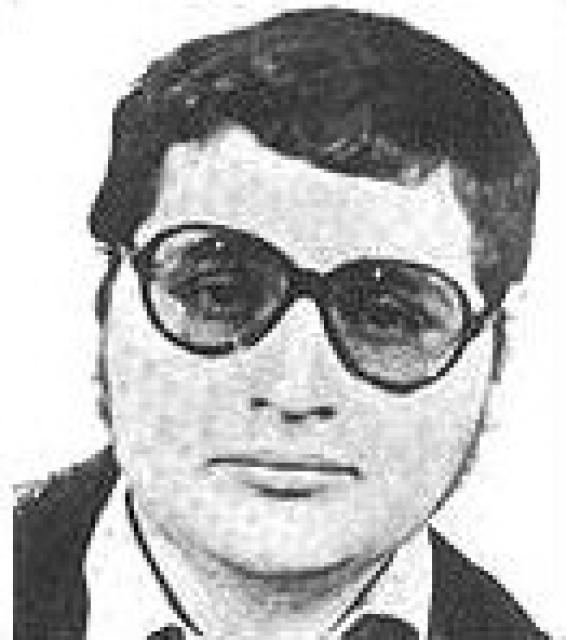
Ilia Sanches (Karlos)
 Venezuela
- Biography of Illich Sanchez (Carlos)
- Here are the milestones of his journey:
- Here are some significant events along his path:
Biography of Illich Sanchez (Carlos)
Illich Sanchez, also known as Carlos, is an international terrorist who has been accused of numerous murders and orchestrating killings of a total of 83 people in different countries around the world. He was finally captured in 1994 after French authorities sentenced him to life imprisonment in absentia.
On August 4, 1994, in the capital of Sudan, Khartoum, doctors at a clinic administered a sedative injection to the 45-year-old, slightly overweight man. While he was asleep, his bodyguards allowed the police to put handcuffs on him. When he woke up, he was informed of his arrest. The following morning, he was transported by a special plane to a military airfield near Paris. This marked the end of the long and relentless efforts by French intelligence agencies to apprehend one of the most dangerous terrorists of the late 20th century, known by his nickname, Carlos. Despite several close calls, Carlos always managed to escape imminent danger. There were even plans to infect Carlos' father with hepatitis in order to lure him to his ailing father and "neutralize" him, but the operation was ultimately canceled due to concerns about his father's safety.
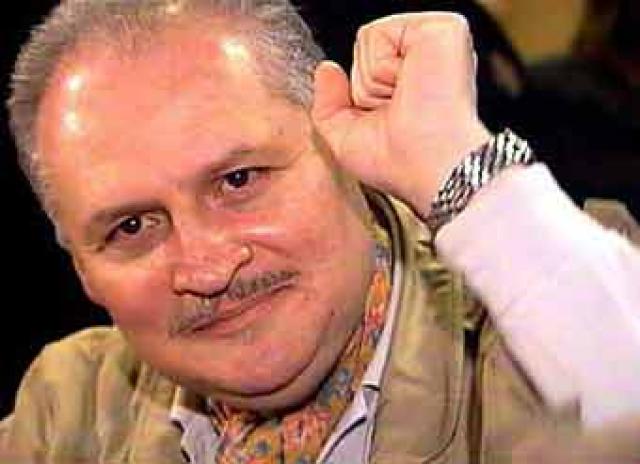
Carlos was born on October 12, 1949, in Caracas, Venezuela. His father, Jose Altagracia Sanchez, was a well-known lawyer, millionaire, and staunch communist. He was so devoted to the ideas of Lenin that he named his three sons Vladimir, Illich, and Lenin in succession. While Vladimir and Lenin did not achieve any particular fame, Illich grew up to become an international killer.
During that time, revolutionary romanticism was rampant in Latin America. Vaccination against it was insufficient, and the disease spread to new layers of society. People from all walks of life joined the ranks of revolutionaries, from law-abiding individuals who sincerely believed in both Marxism and God to individuals with psychopathic tendencies who craved violence and murder. Carlos, who adopted the pseudonym as his name, belonged to the latter category. His life showed that he didn't care who he killed or why, regardless of the empty slogans he used to justify his actions.
Here are the milestones of his journey:
At the age of 15, Carlos joined the Communist Party of Venezuela. After finishing school, he went to Cuba to learn guerrilla warfare techniques in a special training camp. In 1968, Carlos arrived in Moscow and immediately enrolled at the Patrice Lumumba University of Peoples' Friendship, which trained not only specialists but also "agents of influence" in third world countries. Moscow captivated Carlos. He had money, sent in large quantities by his father, girls, and the attention of those around him. He spent more time indulging in revelry, debauchery, and drunken brawls than in classrooms. Eventually, even his patient university supervisors became fed up with him. However, Carlos would have completed his education if it weren't for his participation in an unauthorized demonstration at the Libyan Embassy. As a result, he was expelled from the Soviet Union in July 1970 for "anti-Soviet provocations".
Living a lavish and extravagant lifestyle suited Carlos well. Most importantly, he finally realized that his calling was to fight imperialism and Zionism. He was convinced of this by Palestinian students studying in Moscow. It was the Palestinians who invited him to a training camp for terrorists located in Jordan. Carlos was recruited into terrorism by Wadi Haddad, the organizer of Palestinian terrorism and a member of the Central Committee of the Popular Front for the Liberation of Palestine. Haddad was a man of influence, as he financed terrorist groups worldwide with the money collected from wealthy Arab donors, from the Japanese Red Army to the West German Red Army Faction. When Haddad died of leukemia in 1979, Carlos took over as terrorist number one. By that time, he had already spent seven years actively engaged in terrorism.
Here are some significant events along his path:
- 1972: In London, Carlos shot Edward Seif, a pro-Israeli owner of a department store chain. He also planted a bomb in an Israeli bank branch, injuring one of the employees during the explosion.
- 1973: Carlos became the leader of the European network of the Popular Front for the Liberation of Palestine. Through him, weapons were supplied to left-wing radicals in Western Europe.
- 1974: Carlos was directly or indirectly involved in organizing a series of terrorist attacks in Europe and Japan, including a bombing at the Orly Airport in Paris.
- 1975: French counterintelligence learned the address of Carlos' safehouse in Paris through their informant and set up an ambush. However, Carlos killed two counterintelligence officers and the informant and managed to escape.
- 1975: Carlos and a group of Palestinian and West German militants seized 11 OPEC ministers in Vienna. They were given a demanded airplane and flew to Algeria, where they released some of the hostages. They then flew to the capital of Libya, Tripoli, and eventually returned to Algeria. Although the terrorists surrendered to the authorities there, they were released a few days later.
- 1979-1982: Carlos carried out various assignments for the East German and Romanian intelligence agencies, including a bombing at Radio Free Europe in Munich.
- 1982: Carlos committed a series of terrorist attacks in France. These included a train bombing from Paris to Toulouse, resulting in the death of five people, a car bombing on Marbeuf Street with one fatality and 63 injuries, an explosion at the Marseille Saint-Charles train station with five deaths, and an attack on the construction site of the French nuclear power plant "Phénix" in Creys-Malville.
Carlos was accused of murder and leading killings of a total of 83 people in different countries worldwide. The French court had already sentenced him to life imprisonment in absentia, but he was only captured in 1994.
"Carlos was the luckiest of terrorists," described journalist L. Mlechin. "After the incident in Paris, when he was almost arrested, he tried to avoid risks. Gradually, his name became surrounded by legends. He was attributed to things he had no connection to. Carlos enjoyed this vanity. He said, 'The more myths are written about me, the better, the less desire normal police will have to catch me. For me, it's a kind of guarantee of safety.'"
Carlos was a gentleman with refined manners, a well-dressed individual who spoke English, French, Russian, and Arabic. He appeared to young terrorists as a kind of James Bond. He took great care of himself. He was an exceptional clean freak, worrying about gaining weight. He even consulted cosmetic doctors to see if they could remove his breasts, which were becoming more feminine-like. One of the German radicals mistook him for an Italian mafia member when they met. He introduced himself to Carlos "in a very noble house where the doorman doesn't even allow himself to cough."
Carlos loved staying in luxurious hotels (preferring the Hilton), dining in expensive restaurants, and enjoying a lavish lifestyle, which terrorism allowed him to afford. He was extremely cruel, having no hesitation in shooting two policemen and his former friend Michel Mouharbel in Paris. When preparing for the seizure of oil ministers in Vienna in 1975, he instructed his team as follows: "Hostages who resist will be killed on the spot. Those who do not follow my orders will be shot. Those who attempt to escape will be shot. Those who throw a tantrum will be shot. This is not murder, but a necessity, a tool of political struggle. The more violence, the more respect you will be given, and the more likely your demands will be met."
When European intelligence agencies closed in on Carlos, he moved to East Germany, where he received assistance from the Ministry of State Security. His main bases were in East Berlin and Budapest. Carlos felt at home in East Germany, driving through red lights for fun, shooting ceilings in hotels, organizing gatherings of Arab and European terrorists, and smuggling explosives and weapons across borders.
Carlos' wife, Magdalena Kopp, a West German art historian by education and a terrorist by calling, became his companion. They had a daughter named Rosa. When Magdalena was tracked down and arrested in Paris in 1982, Carlos demanded her release, threatening to wage a terrorist war against France if his demands were not met. The French authorities refused, and the war began. The bombing of the Paris-Lyon train, the firing of multiple rockets at a nuclear power station, and other attacks, including assaults on French embassies in Beirut and Vienna, occurred. After three years, the French surrendered, and Carlos was reunited with his wife. (Currently, she and Rosa live in Venezuela with Carlos' mother.)
When the Soviet Union embarked on its perestroika and a scent of burning began to waft over Eastern European socialist countries, Carlos moved to Syria to stay out of immediate danger. His residence in Syria created political problems for President Hafez al-Assad. In 1991, Carlos was relocated to Sudan. Although he was given a separate house and security, he was eventually handed over to the French authorities, who had found him inconvenient.
While in the Parisian prison, "La Santé," Carlos openly ignored the efforts of investigators, stating that he would never betray the governments and organizations that supplied him with weapons and money and sheltered him from persecution. However, he boasted that he was a member and creator of an organization of international revolutionaries who strictly maintained their ranks' purity, executing defectors and traitors.
Renowned French lawyer Jacques Verges volunteered to be Carlos' defender, a man with a controversial past. During the initial stages of the investigation, Carlos shocked investigators and journalists by stating, "I chose Jacques Verges as my lawyer because he is an even greater terrorist than me. He is responsible for the deaths of more people than I am. He is a terrorist who scares me."
There is no death penalty in France, so Carlos has nothing to fear. A life sentence? He is likely confident that it will not be indefinite. Individuals like him are often used as bargaining chips in high-stakes political games. Perhaps Carlos expects that his release will be achieved by his fellow terrorists, just as he secured his wife's release from the same French prison.