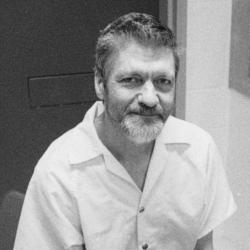
Adlene Hicheur
- Early Life and Education
- Academic Career
- CERN and LHCb Collaboration
- Terrorism Suspicions
- Arrest and Investigation
- Terrorist Plot Allegations
- Trial and Sentencing
- International Support
- Verdict and Legacy
Early Life and Education
Adlene Hicheur was born on December 4, 1976, in Sétif, Algeria. He was one of six children in an Algerian Muslim family. In his youth, Hicheur's parents reportedly moved to France in the 1970s, and Hicheur became a dual citizen of Algeria and France.
Academic Career
Hicheur graduated from the École Normale Supérieure de Lyon in 2000 with a degree in theoretical physics. He obtained his Ph.D. in 2003 from the University of Savoie in Chambéry, specializing in the dynamics of B-mesons. In parallel, he worked at the SLAC National Accelerator Laboratory in the United States in 1999 and 2002.
CERN and LHCb Collaboration
In 2005, Hicheur worked on the particle detector for the ATLAS experiment at the Rutherford Appleton Laboratory in the United Kingdom. He began working on the ATLAS project as early as 2003, according to some reports.
From 2006, Hicheur taught experimental physics at the Swiss Federal Institute of Technology in Lausanne. He also became a contractor for CERN, joining the team of approximately 7,000 scientists working on the Large Hadron Collider (LHC), a particle accelerator located on the border of Switzerland and France. Hicheur worked on the development and setup of the LHCb detector, an experiment designed to investigate the asymmetry between matter and antimatter in B-quark interactions.
Terrorism Suspicions
On October 9, 2009, French authorities arrested Hicheur and his younger brother, Zitouni, on suspicion of having ties to the Algerian branch of Al-Qaeda. Laptops, hard drives, and USB drives were seized from their home in Vienne, France. Initial press reports mistakenly identified Hicheur's middle brother, Halim, who was a biomechanics researcher, as having been arrested.
According to reports, Hicheur had initially been in contact with a small Franco-Belgian terrorist group seeking volunteers to travel to Pakistan and Afghanistan for training as suicide bombers. After this group was arrested in December 2008, Hicheur allegedly turned to Al-Qaeda in the Islamic Maghreb. He communicated with the group through encrypted emails that were tracked by intelligence agencies in the US, UK, and France as early as spring 2008.
Arrest and Investigation
Hicheur's younger brother was released on October 10, 2009, while Hicheur was charged with terrorism conspiracy on October 13. An official investigation was launched on the same day. Hicheur's brother Halim claimed that Hicheur had been arrested after withdrawing approximately 13,000 euros from his bank account to purchase land near their family home in Sétif. Despite Hicheur's reported confession of contacts with terrorists, his brother maintained his innocence.
Terrorist Plot Allegations
On October 13, 2009, French intelligence sources claimed that Hicheur had planned a series of terrorist attacks, including bombing an oil refinery and potentially targeting French President Nicolas Sarkozy. Hicheur allegedly discussed the details of the planned attacks with terrorists and expressed skepticism about the effectiveness of suicide bombings.
In November 2009, police reported that Hicheur was suspected of involvement in planning an attack on a French military base in Haute-Savoie, where mountain troops were being trained to deploy to Afghanistan.
Trial and Sentencing
Hicheur was held in pretrial detention until October 2011 under French anti-terrorism laws. After the investigation concluded, he remained in custody until his trial, which commenced on March 29, 2012. The prosecution's case reportedly relied solely on Hicheur's email correspondence with Mustapha Debchi, an alleged Al-Qaeda operative. Hicheur's defense argued that the correspondence did not provide evidence of any concrete terrorist plots and that he had essentially been detained for two and a half years for making reckless statements.
International Support
Hicheur's colleagues formed the International Committee for Hicheur's Support, which had over 300 members by March 2012. A petition demanding a fair trial for Hicheur was signed by more than 6,000 individuals.
Verdict and Legacy
Hicheur was sentenced to five years in prison on May 4, 2012. Colleagues at CERN described him as a shy but talented scientist. They stated that he had no access to sensitive areas of the collider and was not involved in any activity that could have been of interest to terrorists. Hicheur was the co-author of over 100 publications, primarily in the areas of B-quark research and LHCb design. However, CERN reported that Hicheur had not been physically present at the collider since autumn 2008 due to illness and had been working from home.