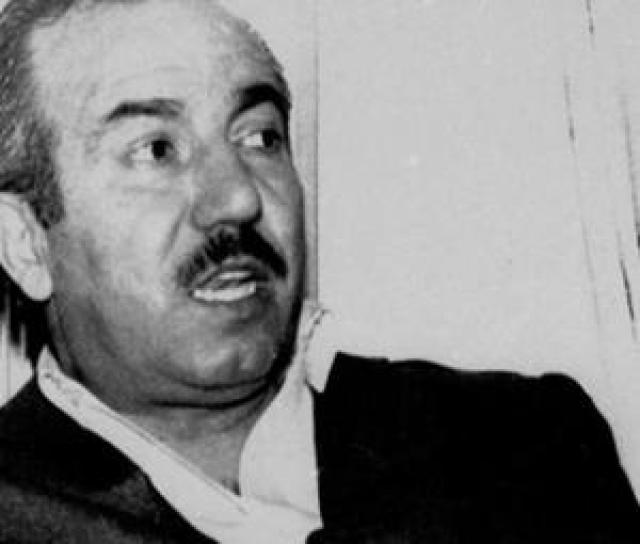
Abu Jihad
- Palestinian Nationalist Leader: The Rise and Fall of Abu Jihad
- Founding Fatah and Embracing "People's War"
- Military Leader and Terrorist Organizer
- Raid on Nahariya in 1974, resulting in the killing of four Israelis
- Attack on Israeli tourists in Hebron in 1980, killing six Israelis
- After the Lebanon War and Personal Feuds
- Assassination and Legacy
- Family and Posthumous Honors
Palestinian Nationalist Leader: The Rise and Fall of Abu Jihad
Early Life and Political AwakeningKhalil Ibrahim al-Wazir, known as Abu Jihad, was born in 1935 in the city of Ramle in British Mandate Palestine. His family was displaced to the El-Bureij refugee camp in the Gaza Strip after the Israeli capture of Ramle in 1948.
Abu Jihad's early education was funded by the United Nations Relief and Works Agency for Palestine Refugees in the Near East (UNRWA), and he excelled in his studies. He attended the University of Alexandria in Egypt, where he simultaneously pursued an undergraduate degree and military training in Cairo.
During his university days, Abu Jihad became involved in organizing fedayeen (guerrilla) units that raided Israeli border outposts. He joined the banned Egyptian organization, the Muslim Brotherhood, for which he served a brief prison sentence. While incarcerated, he studied Hebrew and the history of Zionism.
Founding Fatah and Embracing "People's War"
In 1959, Abu Jihad relocated to Kuwait and joined Yasser Arafat in co-founding the militant Palestinian organization Fatah. He played various roles within Fatah, including editor of the party newspaper "Filastinuna" and head of its first training camp in Algeria.
Influenced by his experiences in China, Abu Jihad became an advocate for "people's war" as a strategy to resist Israel. He traveled to North Vietnam and North Korea, where he received advanced military training.
Military Leader and Terrorist Organizer
After the defeat of Arab armies in the 1967 Six-Day War, Abu Jihad emerged as a key military leader within the Palestine Liberation Organization (PLO). He commanded Fatah's armed wing, Al-Asifa, and held senior positions in the Fatah Central Committee and the Palestinian National Council.
During his tenure, Abu Jihad orchestrated numerous terrorist attacks on Israeli targets within Israel and from Lebanon. These attacks included:
Raid on Nahariya in 1974, resulting in the killing of four Israelis
Seizure of the Savoy Hotel in Tel Aviv in 1975, leading to the deaths of 18 civilians
Bombing of a bus on the Israeli coastal highway in 1978, killing 39 civilians
Attack on Israeli tourists in Hebron in 1980, killing six Israelis
Abu Jihad also masterminded the 1975 hostage-taking at the Egyptian embassy in Madrid.
After the Lebanon War and Personal Feuds
The Israeli invasion of Lebanon in 1982 forced the PLO to withdraw from the country. Abu Jihad became the chief organizer and mastermind of the first Palestinian intifada.
However, tensions arose between Abu Jihad and Arafat in the mid-1980s over the suspension of attacks on Israeli targets outside the occupied territories. Abu Jihad pursued his own activities through other organizations, such as Islamic Jihad and Abu Nidal's organization.
Assassination and Legacy
On April 16, 1988, Abu Jihad was assassinated in his home in Tunis by Israeli commandos. The U.S. State Department condemned the assassination, while Israel initially denied involvement before officially acknowledging it in 2012.
Family and Posthumous Honors
Abu Jihad's widow, Intissar al-Wazir (Umm Jihad), returned to the Gaza Strip in 1995 and became a prominent figure in Palestinian politics. Their son, Jihad al-Wazir, received a doctorate in business and finance and held various positions in Palestinian economic institutions.
In 2010, a central street in Ramallah was named after Abu Jihad, sparking controversy and condemnation from the Israeli government.