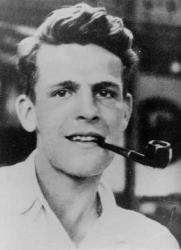
Abdulla Azzam
 Jordan
- Early Life and Education
- Militant Activity
- Leadership in the Afghan Jihad
- Ideological Framework
- Assassination
- Legacy
Early Life and Education
Abdullah Azzam was born in 1941 in the village of As-Ba`ah al-Harthyieh (Silat al-Harithiyya village), several kilometers northwest of Jenin in the Jenin Sanjak district of Palestine. After graduating from high school, he studied agriculture at Hadori College near Tulkarm. Upon completing his studies there with honors, he worked as a teacher in the village of Addar in southern Jordan.
Subsequently, he enrolled at the University of Damascus, where he earned a degree in Sharia law (1966). Following the 1967 Six-Day War, he returned to Palestine and joined the Muslim Brotherhood organization.
Militant Activity
Azzam participated in PLO operations against Israel but soon became disillusioned with the organization, advocating for a pan-Islamic movement that would liberate the entire Middle East from colonial powers. He is believed to have played a role in the founding of Hamas.
He then traveled to Egypt, where he continued his education at Al-Azhar University in Cairo, obtaining a Masters degree in Sharia law in 1969. Upon returning to Jordan in 1970, he taught at the University of Jordan in Amman but was soon sent to Egypt for further study.
In 1971, Azzam returned to Al-Azhar University, where he earned a PhD in 1973 with a dissertation on the principles of Islamic jurisprudence. During his studies in Egypt, he encountered Omar Abdel-Rahman, Dr. Ayman al-Zawahiri, and other followers of influential Egyptian Muslim Brotherhood leader Sayyid Qutb, who was executed in 1966. Azzam adopted elements of Qutb's ideology, including the concept of a clash of civilizations between the Islamic and non-Islamic worlds and the necessity of revolution and the overthrow of Islamic governments to establish a unitary Islamic state.
Leadership in the Afghan Jihad
After completing his doctorate, Azzam returned to the University of Jordan as a faculty member. According to Steve Coll, Azzam relocated to Saudi Arabia in the early 1970s and lectured at King Abdulaziz University in Jeddah until 1979. Notably, Osama bin Laden grew up in Jeddah and studied at the same university from 1976 to 1981.
Following the bloody events at the Grand Mosque in Mecca in late 1979, Abdullah Azzam was expelled from the university in Jeddah and fled to Pakistan, where he emerged as a prominent leader of the Afghan mujahideen. However, an alternative version of his biography suggests that Azzam worked in Amman until 1979, when he was dismissed from his job by order of a Jordanian military court. He then traveled to Saudi Arabia, where he remained only until 1980 before securing a position at the International Islamic University in Islamabad with the intent of participating in the Afghan jihad. Some sources omit any mention of a Saudi period in his career.
Ideological Framework
Azzam developed a theoretical framework for global jihad, advocating for the establishment of a group that would spearhead the movement and serve as the core and reliable base of Islamic society (al-Qaeda). He argued that a jihadist victory in Afghanistan would liberate Muslim lands, including Spain. Azzam's list of territories to be liberated also included Soviet Central Asia, Bosnia, the Philippines, Kashmir, Somalia, and Eritrea. He believed that an immediate jihad in Palestine should follow the victory in Afghanistan. To this end, Azzam planned to train Hamas fighters in Afghanistan.
This led to a clash with the Egyptian Islamic Jihad, another influential Islamist terrorist group among Afghan Arabs led by Ayman al-Zawahiri. The Egyptian Islamic Jihad called for first instigating uprisings against unpopular governments within Muslim countries, primarily Egypt. Azzam, on the other hand, believed this approach would only deepen divisions within Islamic society.
Assassination
On November 24, 1989, Abdullah Azzam was assassinated as he was on his way to the mosque where he gave sermons every Friday. An explosive device planted by the side of the road was detonated by assassins hiding in a sewer using a fifty-meter-long detonation cord. Two of Abdullah Azzam's young sons were also killed in the blast. The perpetrators remain unknown.
Legacy
Following Abdullah Azzam's death, his writings and training manuals for militants continued to be distributed in printed form and online by Azzam Publications, a London-based company that maintained a website at www.azzam.com (shut down shortly after 9/11; mirror sites continued to operate for some time thereafter).
Abdullah Azzam is the author of five books on the theory and practice of armed jihad.