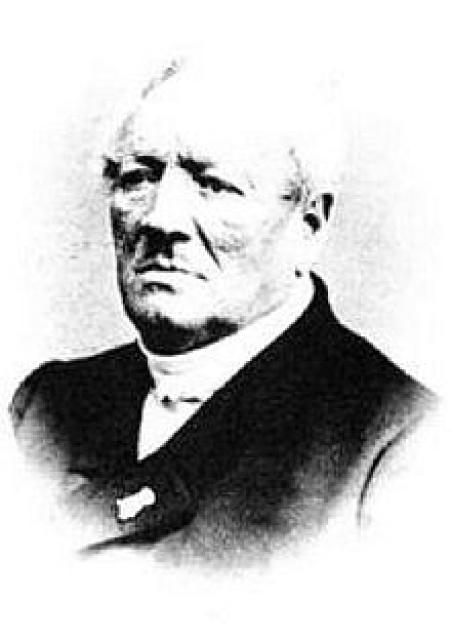
Achille Valenciennes
 France
- Achille Valenciennes: A Renowned French Zoologist
- Museum Apprenticeship
- Scientific Collaborations
- Pioneering Ichthyology
- Malacology and Expeditions
- Academic Honors
Achille Valenciennes: A Renowned French Zoologist
Early Life and EducationAchille Valenciennes was born in the eminent National Museum of Natural History in Paris, where his father served as a scientific assistant. Despite excelling in mathematics and aspiring to enter the École Polytechnique, his father's untimely demise forced him to abandon his studies and seek employment to support his widowed mother and four sisters.
Museum Apprenticeship
At the tender age of eighteen, Valenciennes began his career as a preparator at the Museum of Natural History. Initially tasked with taxidermy, his exceptional abilities led to expanded responsibilities. He assisted Étienne Geoffroy Saint-Hilaire and later Jean-Baptiste Lamarck, aiding in classifying and curating invertebrates, zoophytes, and mollusks.
Scientific Collaborations
Valenciennes' work attracted the attention of the renowned Georges Cuvier, who commissioned him for additional projects. In 1827, Valenciennes embarked on independent research, traveling extensively to examine fishes in museums and private collections throughout Europe.
Pioneering Ichthyology
Valenciennes became a renowned ichthyologist, specializing in the study of fishes. Together with Cuvier, he co-authored the monumental 22-volume "Histoire naturelle des poissons" (1828-1848), describing over 4,000 species, including 2,311 new discoveries.
Malacology and Expeditions
Valenciennes also made significant contributions to malacology. He described mollusks collected during the global expedition of the frigate Venus (1836-1839). In 1832, he succeeded Henri Blainville as chair of the Museum's department of worms, mollusks, and zoophytes.
Academic Honors
Valenciennes' scientific achievements were recognized with his election to the French Academy of Sciences in 1844. Throughout his career, he remained affiliated with the Museum of Natural History, where he continued to inspire and mentor generations of zoologists.


