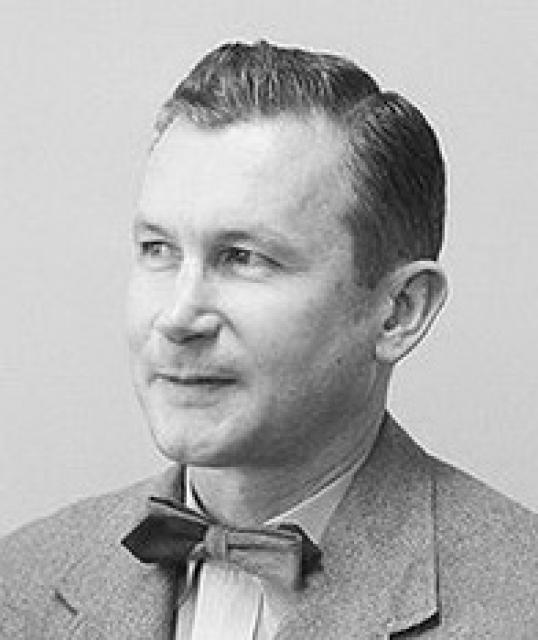
Karl Walton Kenyon
 USA
USA- Karl W. Kenyon: Renowned Marine Mammal and Seabird Specialist
- Military Service and Awards
- Wildlife Research and Conservation
- Sea Otter Studies and Captive Breeding
- Aviation Accident and Scientific Legacy
- Other Contributions
- Recognition and Honors
- Legacy
Karl W. Kenyon: Renowned Marine Mammal and Seabird Specialist
Early Life and EducationBorn in La Jolla, California in 1918, Karl Walter Kenyon pursued his passion for wildlife conservation at an early age. He studied at Pomona College from 1936 to 1940 before obtaining a Master's degree from Cornell University in 1941.
Military Service and Awards
During World War II, Kenyon joined the U.S. Navy and served as a pilot aboard the aircraft carrier Sangamon. He flew 97 combat missions and was awarded the Navy Cross for his actions during the Battle of Leyte Gulf in October 1944.
Wildlife Research and Conservation
After the war, Kenyon embarked on expeditions to the Baja California Peninsula and published studies on bird distribution. He taught zoology at Mills College from 1947 to 1949 before joining the U.S. Fish and Wildlife Service (USFWS).
Sea Otter Studies and Captive Breeding
Kenyon's most significant contribution was his extensive research on sea otters, particularly in the Aleutian Islands. He developed innovative techniques for their captive care and transportation, revolutionizing the study of these elusive mammals.
Aviation Accident and Scientific Legacy
In 1961, Kenyon's sea otter investigations were interrupted by a plane crash. Despite sustaining only minor injuries, he was forced to discontinue his research on Amchitka Island due to underground nuclear tests. His comprehensive monograph, "The Sea Otter in the Eastern Pacific Ocean," published in 1969, became a benchmark in sea otter ecology.
Other Contributions
In addition to his work with sea otters, Kenyon also studied Pacific walruses, Caribbean monk seals, and the homing abilities of black-footed albatrosses. He conducted pioneering aerial surveys of sea lion populations in the western Gulf of Alaska and the Aleutians.
Recognition and Honors
Kenyon's contributions to marine mammal and seabird research were widely acknowledged. He received the Pacific Seabird Group's Lifetime Achievement Award in 1993, and several species and geographic features bear his name, including a subspecies of sea otter (Enhydra lutris kenyoni).
Legacy
Karl W. Kenyon passed away in 2007, leaving an enduring legacy as a dedicated wildlife conservationist and a respected scientist. His groundbreaking research and tireless advocacy for marine wildlife continue to inspire generations of researchers and conservationists alike.