Adam De la Halle
 France
- Biography of Adam de la Halle
- Education and Early Life
- Association with Charles of Anjou
- Notable Works
- Legacy
- Death
Biography of Adam de la Halle
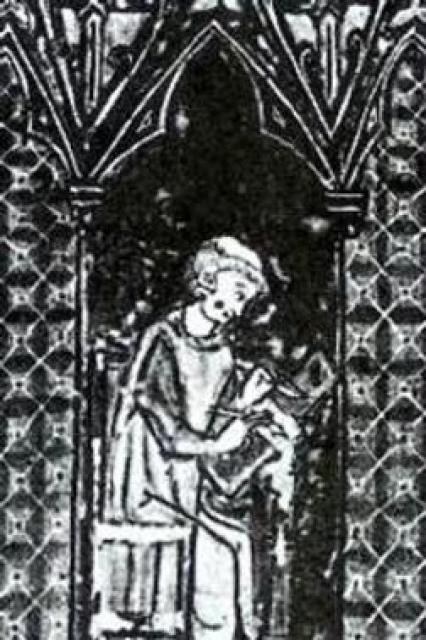
Adam de la Halle, also known as Adam le Bossu, was a French poet and composer, and a trouvère. He was born around 1237 in Arras, France. His father, Henri de la Halle, was a well-known and respected figure in Arras. Adam studied grammar, theology, and music at the Cistercian Abbey of Vaucelles, near Cambrai.
Education and Early Life
Adam de la Halle studied grammar, theology, and music at the Cistercian Abbey of Vaucelles, near Cambrai. Although he was expected to pursue a religious career, Adam declined the ordained priesthood and later moved to Paris, where he settled with Count Robert II, Count of Artois.
Association with Charles of Anjou
Adam de la Halle became one of the close associates of Charles of Anjou, the brother of King Louis IX. He accompanied Charles on his various travels, including trips to Syria, Palestine, Italy, and Egypt. By this time, Adam had gained recognition as a well-established trouvère (troubadour).
Notable Works
One of Adam de la Halle's most famous works is "Jeu de Robin et Marion" ("The Play of Robin and Marion"). This play, believed to be written around 1275, is considered one of the earliest prototypes of comic opera. It incorporates popular songs and dances that seamlessly blend into the plot. Another well-known work by Adam de la Halle is "Jeu de la feuillée" ("The Play of the Bower"), composed around 1276.
Legacy
Adam de la Halle's works were predominantly comedic, offering realistic depictions of urban and peasant life. His creative legacy includes 36 monophonic songs (chansons), approximately 18 jeux partis (dialogue songs of courtly content), 14 rondeaux (rondeaux), and various other musical materials of different genres. His works are considered exemplary of French popular song and dance music. All available works by Adam de la Halle were first collected and published by E. Coussemaker in 1872.