Paul Wranitzky
 Austria
- Biography of Paul Wranitzky
- Respected by Mozart, Haydn, and Beethoven
- A Legacy of String Quartets
- A Forgotten Composer
Biography of Paul Wranitzky
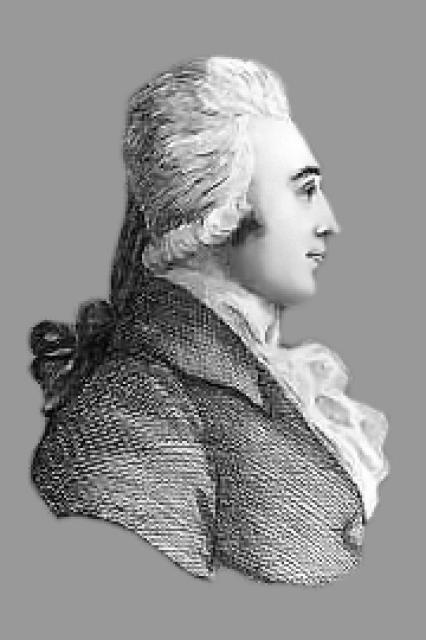
Paul Wranitzky, a Moravian classical composer and conductor, was born on December 30, 1756, in Neureisch, Moravia. He studied at the University of Olomouc's theological faculty and later entered a seminary in Vienna. From a young age, Paul mastered the violin and organ, while also studying singing. At the age of 20, like many Czech composers, Wranitzky moved to Vienna in search of new opportunities in the Austrian imperial capital. By 1790, he became a conductor for both royal theater orchestras.
Respected by Mozart, Haydn, and Beethoven
Wranitzky gained great respect from Mozart, Haydn, and Beethoven. Beethoven and Haydn preferred to use Wranitzky as a conductor for their new works. Wranitzky was a prolific composer, having written 10 operas, 44 symphonies, and at least 56 string quartets (some sources suggest 73). He also composed numerous other orchestral and chamber music pieces. His opera "Oberon, The Fairy King" in 1789 was a favorite in this genre and inspired Emanuel Schikaneder to write the libretto for Mozart's "The Magic Flute." In the mid-1790s, Goethe actively sought collaboration with Wranitzky to write a sequel to Mozart's opera.
A Legacy of String Quartets
Many of Wranitzky's quartets match the quality of Parisian concert quartets. In his compositions, the composer experimented with a new romantic style (for that time) that featured bold harmonic progressions, theatrical gestures, and virtuosic presentation of material to the audience. Ron Drummond, a music historian, wrote after familiarizing himself with Wranitzky's ten string quartets: "I can say with absolute certainty that Wranitzky's achievements as a composer of string quartets, overall, surpass Mozart's achievements. To clarify, Mozart's quantity of works pales in comparison to Wranitzky's productivity, but the quality of each composer's works is so superior that Wranitzky triumphs in terms of quantity."
A Forgotten Composer
Paul Wranitzky died on September 29, 1808, in Vienna. In 1932, a street in Vienna was named after him in honor of the composer. Some scholars believe that Wranitzky studied under Haydn, although there is no evidence to support this claim. Nevertheless, there is no doubt that Haydn's quartets had a significant influence on the Czech-Austrian composer. Like Haydn, Wranitzky's quartets went through many stages of development, starting from the "pre-classical" state and ending with the mature sonata form of the late Viennese classical school.
Describing Wranitzky's music in the late 19th century, renowned French critic and musicologist François-Joseph Fétis recalled, "Wranitzky's music was fashionable because it was something new - with its understandable melodies and brilliant style. He conducted the orchestra excellently, especially the symphonies. I remember that in my youth, his works were very well-received by the public compared to Haydn. The premature decline of interest in Wranitzky today surprises me greatly."
Wranitzky's repertoire also includes "Das Waldmädchen" (1796), "Zephir und Flora" (1795), and "Der Raub der Sabinerinnen" (1804).