Adelbert Ames Jr.
 USA
USA- Biography of Adelbert Ames Jr.
- Early Life and Education
- Artistic Endeavors and Interest in Optics
- Contributions to Optics and Academic Career
- Legacy and Death
Biography of Adelbert Ames Jr.
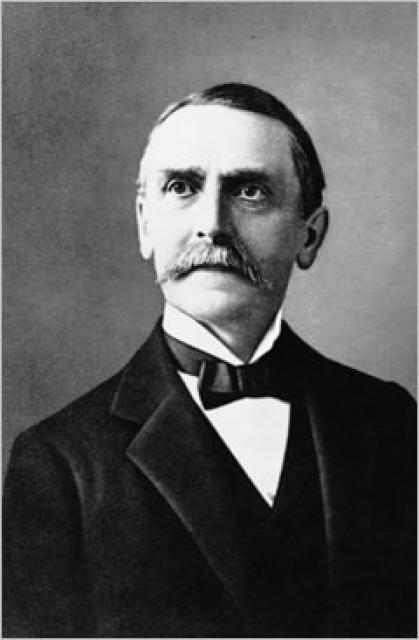
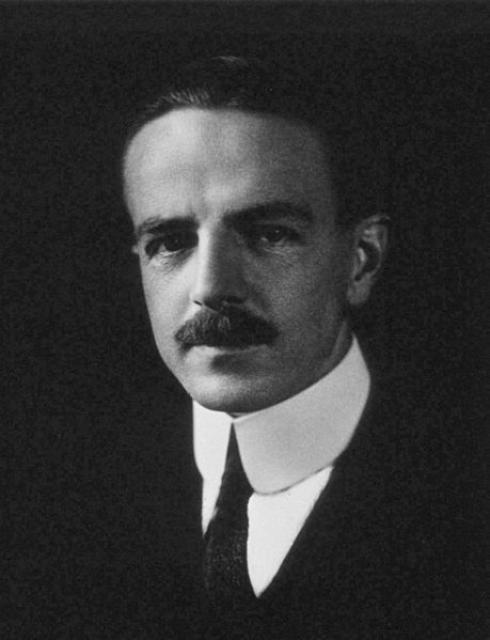
Adelbert Ames Jr. was an American physicist, physiologist, ophthalmologist, psychologist, and philosopher. He is best known for his physiological research conducted at Dartmouth College and the Dartmouth Eye Institute.
Early Life and Education
Ames was born in Lowell, Massachusetts. His father, Adelbert Ames, was a Union Army general, a prominent state-level politician, and an inventor of various useful devices such as pencil sharpeners. His mother, Blanche Butler Ames, was the daughter of another well-known military figure, Benjamin F. Butler. Ames attended Phillips Academy in Andover, Massachusetts, and later enrolled in Harvard College, where he received a degree in law. After practicing law for a year, he decided to pursue a career as an artist.
Artistic Endeavors and Interest in Optics
Ames collaborated with his sister, Blanche Ames Ames, in their artistic pursuits. Together, they embarked on a relatively unconventional path for artists, attempting to "paint harmony with algebra." Adelbert and Blanche believed that a deep understanding of the principles underlying human vision would help them create visually appealing paintings. Initially, Ames did not plan to delve further into the mysteries of human vision beyond what was necessary for his art. However, his research in optics gradually captivated him, leading him to abandon art and pursue scientific studies.
Contributions to Optics and Academic Career
Ames studied physiological optics at Clark University, where he made a significant impression on his fellow scientists. He later became one of the founders of the Optical Society of America. During World War I, Ames served in the aviation division before focusing on developing technical inventions, while continuing his optical research. It was during this period that he met Professor Charles Proctor, a physics professor at Dartmouth College.
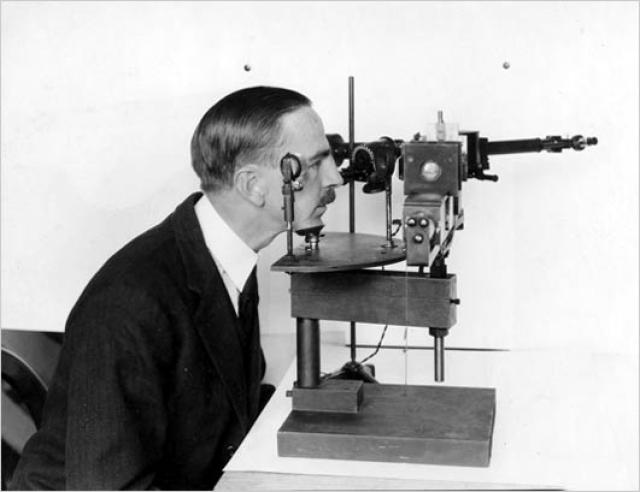
After the war, Ames continued his collaboration with Proctor at Dartmouth College. During their work on a large-scale model of the human eye, Ames published his first major article, received an honorary master's degree, and was appointed as a professor. In 1923, Ames began to assemble a team for the yet-to-be-established Dartmouth Eye Institute. He successfully recruited numerous prominent scientists and secured sponsorship from various entrepreneurs and organizations.
Research conducted at the institute primarily focused on binocular vision and its aspects and defects. The institute underwent a transformation from the Faculty of Physiological Optics to the Dartmouth Eye Institute in 1935. Ames's inventions, such as the "Ames Room," the "Ames Chair," and the "Ames Window," gained significant recognition. Each of these objects represents a real-life embodiment of an optical illusion, and Ames's studies in optics helped develop precise schematics for these illusions. These inventions also had practical applications, with 3D floors being created based on the same principle, and the effects of the "Ames Room" actively used in movies and television, including scenes in "The Lord of the Rings."
Legacy and Death
Adelbert Ames Jr. passed away on July 3, 1955, at the age of 74. He was buried in the Dartmouth Cemetery. His contributions to the field of optics and his innovative inventions continue to be influential in the realms of art, science, and cinematography.