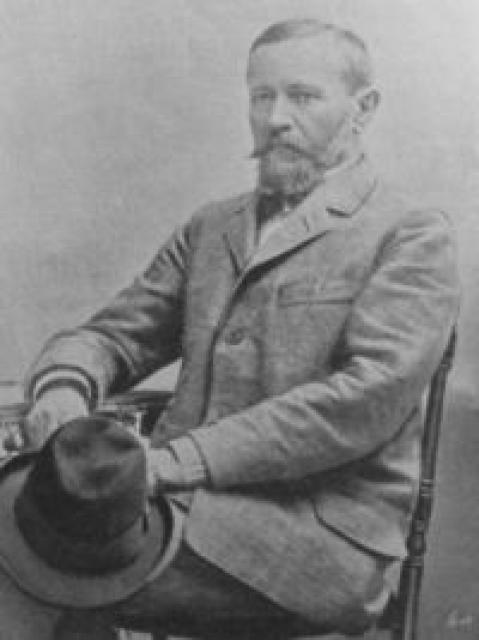
Adolf Digasinskiy
 Poland
Biography of Adolf Dygasinski
Adolf Dygasinski was a Polish writer, publicist, and educator, known as one of the founders of Polish naturalism and its most prominent representative. He was born into a modest noble family and received his education in Pinsk and a real school in Kielce. Later, he studied languages, geography, and natural sciences at the Warsaw Main School (later Warsaw University).
Dygasinski was involved in the Polish uprising of 1863 and was imprisoned as a result. After the suppression of the uprising, he attempted to continue his education at the Warsaw Main School and Charles University in Prague, but had to interrupt it due to lack of funds. He then worked as a governess and teacher on noble estates. In Krakow, he was involved in pedagogical and publishing activities from 1871 to 1877. In 1872, he got married. He published a series called "Library of Natural Sciences" ("Biblioteka Umiejętności Przyrodniczych"), but his bookstore, established to distribute his publications, went bankrupt.
In 1877, Dygasinski settled in Warsaw and earned a living through private lessons. He contributed to the Warsaw press, mainly with articles on literary topics. He started his literary career relatively late and worked in newspaper and magazine editing. In 1888, he was deprived of his right to teach by the Russian authorities and returned to being a governess after leaving Warsaw. In 1891, he traveled to Brazil as a correspondent for the newspaper "Kurier Warszawski" ("Warsaw Courier"), where he studied the working and living conditions of Polish immigrants. He published his "Letters from Brazil" as a result of this trip.
In the later years of his life, Dygasinski settled in Warsaw and was buried in the Powązki Cemetery. He contributed as a publicist to the Warsaw weekly "Przegląd Tygodniowy" ("Weekly Review"), where his short stories were also published. From 1884 to 1887, he was a member of the editorial board of the magazine "Wędrowiec" ("The Wanderer"), where he eventually became an editor. He also collaborated with the newspaper "Głos" ("The Voice") in 1886.
Dygasinski wrote short stories, novellas, and novels. His works were published separately from 1884 onwards. He is considered a prominent animalist writer. In his stories and novellas about animals and birds, such as "For the Cow" (1883), "The Wolf, the Dogs, and the Men" (1883), and "The Hare" (1898), as well as in his works about the life and customs of peasants, he drew analogies between the human and animal worlds, presenting certain social types as a kind of animal species fighting for survival. In his novel "The Von Mölken Family" (1885) and the novel "Mr. Andrzej Piśchal" (1890), he attributed the degeneration of the nobility to heredity. Dygasinski also authored a treatise called "Years of Life" ("Gody Życia", 1902), a novella called "Head over Heels" ("Na złamanie karku", 1893), a novel called "Vodka" ("Gorzalka", 1894), and other prose works, including works for children.


