Adolf Guillaumat
 France
- Biography of Adolphe Guillaumat
- Early Career and Education
- Teaching Career and Military Positions
- World War I and Achievements
- Later Career and Contributions
Biography of Adolphe Guillaumat
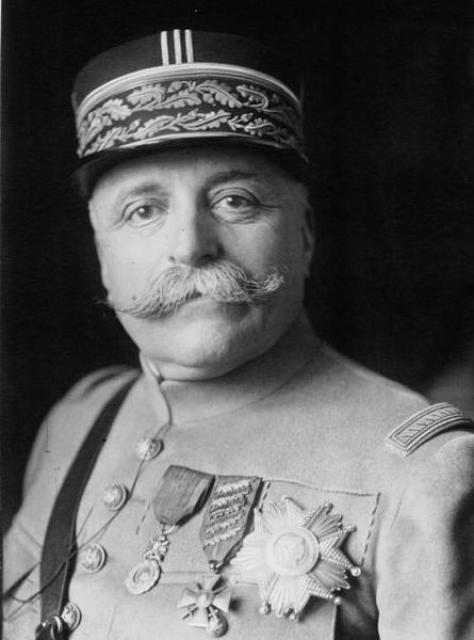
Adolphe Marie Louis Guillaumat was born on January 4, 1863, in Borne, Charente-Maritime, France. He was a French divisional general and played a significant role in World War I.
Early Career and Education
Guillaumat received his education at the Saint-Cyr Military School in 1884 and later attended the General Staff Academy in 1905. Initially, he joined the Marine Infantry. He served in various locations, including France and Tonkin, and also participated in the China Expedition of 1900-1901.
Teaching Career and Military Positions
In 1903, Guillaumat became a professor at the Saint-Cyr Military School, specializing in tactics. Later, in 1907, he became a professor of infantry tactics at the General Staff Academy. In 1909, he began his service in the Ministry of Defense and became the director of the Infantry Department in 1912. From January 1913, he served as the head of the Infantry Service Bureau of the Ministry of Defense. Concurrently, starting from June 14, 1914, he also held the position of chief of staff to the Minister of War, A. Messimy.
World War I and Achievements
At the outbreak of World War I, Guillaumat was under the command of General J. Joffre. On September 2, 1914, he became the commander of the 33rd Infantry Division and later led the 4th Infantry Division. In February 1915, he became the commander of the 1st Army Corps. Guillaumat played a vital role in the defense of the fortress of Verdun in 1916 and in the Battle of the Somme.
On December 13, 1916, Guillaumat was appointed by General R. Nivelle as the commander of the 2nd Army. He was entrusted with leading the August Offensive on the Meuse against the German 5th Reserve and 7th Army (12 divisions and 1,100 guns). After a seven-day artillery preparation, Guillaumat's troops launched an attack on August 20, 1917, and the following day captured a series of heights. As a result of the operation, the French army regained the territory occupied by the Germans in 1916. Guillaumat's army captured about 10,000 prisoners, 30 guns, and 250 machine guns.
Later Career and Contributions
On December 14, 1917, Guillaumat replaced General M. Sarrail as the commander-in-chief of the Eastern Army in Salonika. At that time, the Salonika Front consisted of 23 infantry divisions, including French, Serbian, British, Greek, Italian, and Russian, totaling approximately 600,000 soldiers. Guillaumat faced the challenging task of restoring the morale of the Allied forces, which had deteriorated due to prolonged inactivity, and reconciling the divergent interests of the allies on the Balkan Peninsula. He devised a plan for an offensive but was unexpectedly called back to France in June 1918 to serve as the military governor of Paris, which was once again under threat from German forces.
When the general offensive of the Allies began in France after the Second Battle of the Marne, Guillaumat insisted in the Supreme War Council on the need to launch an offensive on the Macedonian Front, which was brilliantly executed by his successor, General L. Franchet d'Espèrey. From October 1918 until the armistice, Guillaumat commanded the 5th Army, which was advancing from the Reims area.
From January 30, 1920, Guillaumat served as a member of the Supreme War Council and Inspector General of the Army. From 1924 to 1930, he was the commander-in-chief of the French occupation forces in Germany. In 1925, he briefly held the position of Minister of War. Guillaumat made significant contributions throughout his military career, demonstrating his strategic abilities and leadership skills. He passed away in Nantes in 1940.