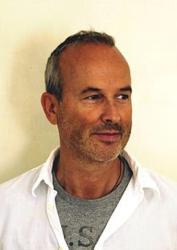
Adolf Wolfli
 Switzerland
- АдOLF WÖLFLI: A PIONEER OF ART BRUT
- Troubled Childhood and Early Years
- Institutionalization and Artistic Awakening
- Prolific Artistic Legacy
- Recognition and Influence
- International Acclaim
- Musical and Theatrical Adaptations
- Legacy and Impact
АдOLF WÖLFLI: A PIONEER OF ART BRUT
Adolf Wölfli (1864-1930) was a Swiss artist and one of the most significant figures in the Art Brut movement. Born in Bern, Switzerland, Wölfli's early life was marked by trauma and instability.
Troubled Childhood and Early Years
At the age of seven, Wölfli was abandoned by his alcoholic father, a stonemason. He worked as a farm laborer and was later arrested for public indecency. After a relapse, he was examined by medical professionals and diagnosed with schizophrenia.
Institutionalization and Artistic Awakening
From 1895 until his death, Wölfli lived in the Waldau Psychiatric Clinic, where he shared a ward with notable patients such as Vaslav Nijinsky, Friedrich Glauser, and Robert Walser. It was here that Wölfli, at the age of 35, began drawing, writing poetry, and composing music.
Prolific Artistic Legacy
Wölfli left behind an immense artistic inheritance, including tens of thousands of drawings and collages, as well as literary and musical compositions. His work showcased vivid imagery, fantastical landscapes, and intricate patterns, often filled with themes of sexuality, violence, and grandeur.
Recognition and Influence
Wölfli's work gained recognition after the publication of "The Artist in Mental Illness" (1921) by Swiss psychiatrist Walter Morgenthaler. This, along with Hans Prinzhorn's "Art of the Mentally Ill" (1922), drew the attention of surrealists like André Breton and Jean Dubuffet, who championed Art Brut.
International Acclaim
Wölfli's work was featured in the 1948 Paris exhibition of Art Brut and in the 1972 Documenta art exhibition in Kassel. In 1975, his drawings and collages became part of the permanent collection of the Bern Art Museum.
Musical and Theatrical Adaptations
Wölfli's poetry inspired vocal cycles by German composer Wolfgang Rihm (1981) and an opera by Austrian composer Georg Friedrich Haas (1981). Danish composer Per Nørgård created the opera "Divine Tivoli Gardens" (1983) based on Wölfli's texts. French composer Georges Aperghis wrote a cantata based on Wölfli's poetry in 2006.
Legacy and Impact
Adolf Wölfli's art and writing continue to be studied and admired for their raw authenticity, imaginative power, and subversive nature. He remains a seminal figure in the field of Art Brut and an inspiration for artists around the world.