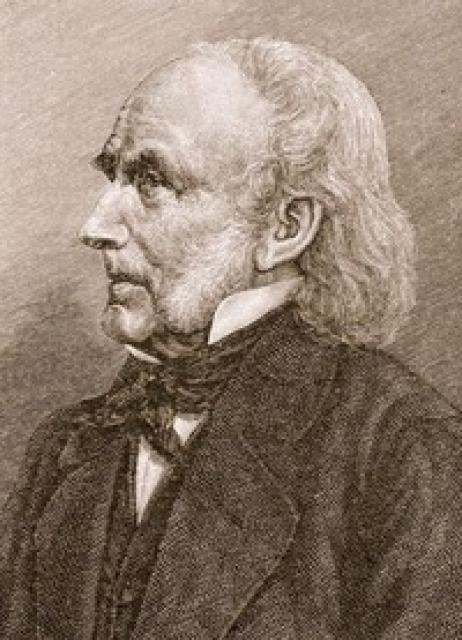
Adolph Diesterweg
 Germany
- Biography of Adolf Diesterweg
- Theory of Education
- Requirements for Education
- Three Stages of Child Development
- Teaching
- Primary and Secondary Education
- Teaching Principles and Rules
- Requirements for Teachers
Biography of Adolf Diesterweg
Adolf Diesterweg was a German educator and liberal politician. He advocated for the secularization of schools and worked as a physics and mathematics teacher in various schools in Worms, Frankfurt-on-the-Main, and Wuppertal from 1812 to 1820. He then held the position of director of teacher training seminaries in Mörse from 1820 to 1832 and in Berlin from 1832 to 1847.
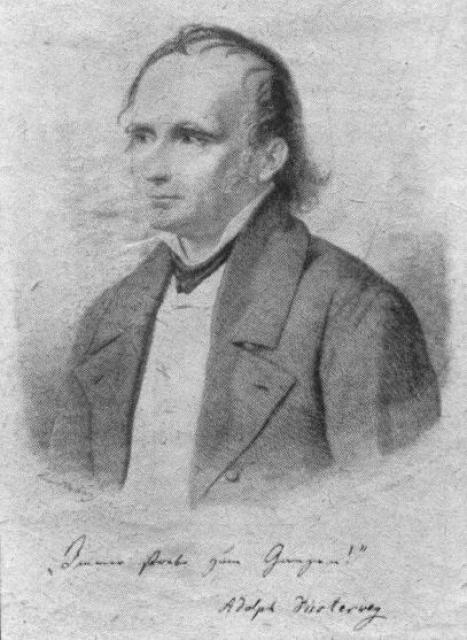
Diesterweg aimed to unify German teachers and founded four teacher societies in Berlin from 1831 to 1841. In 1848, he was elected as the chairman of the "General German Teacher's Union". He published the educational journal "Rheinische Blätter für Erziehung und Unterricht" from 1827 to 1866 and the annual "Pädagogisches Jahrbuch" from 1853 to 1867. Despite being dismissed by the Prussian government for "dangerous free thought" after the suppression of the 1848 revolution, Diesterweg continued his literary and socio-political activities. He fought against the reactionary school laws issued by the Prussian government in 1854 through his writings and speeches in the Chamber of Deputies, where he was elected as a representative of the Berlin teachers. The efforts of Diesterweg and the public led the government to issue a circular in 1859 that significantly weakened the regulations.
Diesterweg's progressive socio-educational activities continued until his death in 1866 due to cholera. He advocated against social and national limitations in education, religious education, and church control over schools, as well as against the upbringing of youth in the spirit of religious intolerance. The main goal of education, according to Diesterweg, was the development of independence in the service of truth, beauty, and goodness. The goals and principles of education were to cultivate humane individuals, conscious citizens, and love for humanity and one's own people simultaneously.
Theory of Education
Diesterweg defined the theory of education as the "theory of stimulation". He believed that the free development of an individual's inner potential and the systematic influence of organized education were interconnected in the process of becoming who one should be. He emphasized the importance of developing self-activity in children, which had a positive value only when directed towards achieving specific objectives that constituted the objective aspect of education.
Requirements for Education
Diesterweg placed great emphasis on the development of self-activity in children, which he considered a decisive factor in shaping their personality and behavior. He also emphasized the principle of cultural relevance, which meant organizing the educational process with consideration for external, internal, and social culture. External culture encompassed moral, daily life, and consumption norms, while internal culture referred to an individual's spiritual life. Social culture referred to social relationships and national culture. Education should be characterized by cultural relevance and universal education, without being exclusive or chauvinistic.
Three Stages of Child Development
Diesterweg proposed a three-stage model for the age-related development of school-age children. For children in the first stage, aged 6 to 9, physical activity, sensory perception, playfulness, imagination, and love for fairy tales predominated. Guiding sensory perception and exercising the senses became essential in teaching children of this age group. The second stage, from 9 to 14 years old, was characterized by the development of memory and the accumulation of concepts. The main task of education during this stage was to connect children's minds with sensory-perceptible material, ensuring its solid assimilation and the acquisition of necessary study skills. The third stage, covering students aged 14 to 16, marked the intensification of intellectual activity and the formation of rational thinking.
Teaching
The main task of teaching was the development of children's intellectual abilities. Formal education was linked to material conditions and contributed to the comprehensive development and moral upbringing of individuals. The subjects taught included national history, geography, the native language, natural sciences, and mathematics. Diesterweg valued the teaching of national history, geography, the native language, and literature. He particularly emphasized the importance of natural sciences and mathematics as essential means of intellectual development and practical preparation for students. He believed that these subjects should be taught in all types of educational institutions, providing students with necessary knowledge and practical skills.
Primary and Secondary Education
Primary education should focus on imparting basic skills, developing mental powers and abilities, teaching independent work, and assimilating academic material. The use of a developmental teaching method was recommended. Secondary education should equip students with comprehensive scientific knowledge.
Teaching Principles and Rules
Diesterweg advocated for the principles of natural relevance, self-activity, and culture in education. He also provided psychological justification for the rules formulated by Jan Amos Comenius. According to Diesterweg, teaching should be tailored to the characteristics of children's perception, progressing from examples to rules, from objects to their designations, from simple to complex, from easy to difficult, and from known to unknown. Consistent consolidation of material was essential.
Requirements for Teachers
Diesterweg believed that a teacher should constantly work on their own education and self-improvement. They should have a deep understanding of their subject, love their profession and students, and possess progressive convictions and civic courage. The atmosphere in the classroom should be energetic, and teaching should be vigorous to stimulate students' mental powers, strengthen their will, and shape their character. Teachers should firmly and consistently adhere to their educational principles, continuously work on themselves, have a strong character, and be strict, demanding, and fair. They should be true citizens and exhibit progressive beliefs and civic courage. Diesterweg famously wrote, "The most important phenomenon in school, the most instructive object for the student, is the teacher".
Adolf Diesterweg was a follower of Johann Heinrich Pestalozzi and creatively developed his pedagogical teachings, popularizing them among German teachers. His educational ideas and textbooks had a positive impact on the development of popular education in Germany and gained recognition beyond its borders. Prominent Russian educators of the 1860s, such as Peter Redkin, Nikolai Bunakov, Nikolai Korf, and Iosif Paulson, highly appreciated Diesterweg's teachings. In the German Democratic Republic, there was a Diesterweg Medal awarded to distinguished teachers.


