Adrian Willaert
 Netherlands
- Adriano Willaert: The Father of the Venetian School
- Move to Italy and Influence
- Service to Cardinal d'Este
- Director of the St. Mark's Cathedral Chapel
- Musical Legacy
- Experimental Motets
- Quid ebrietas non dissignat
- Later Masterpieces
- Madrigals
Adriano Willaert: The Father of the Venetian School
Early LifeAdriano Willaert was a Flemish composer and teacher born around 1485. He was renowned for his contributions to the Franco-Flemish polyphonic school and the establishment of the Venetian School.
Move to Italy and Influence
Around 1514, Willaert settled in Italy, where he became a disciple of the French composer Jean Mouton. He spent much of his career there, shaping the musical landscape.
Service to Cardinal d'Este
In 1515, Willaert entered the service of Cardinal Ippolito d'Este in Ferrara as a singer. He accompanied him on a journey to Hungary and possibly Poland in 1518.
Director of the St. Mark's Cathedral Chapel
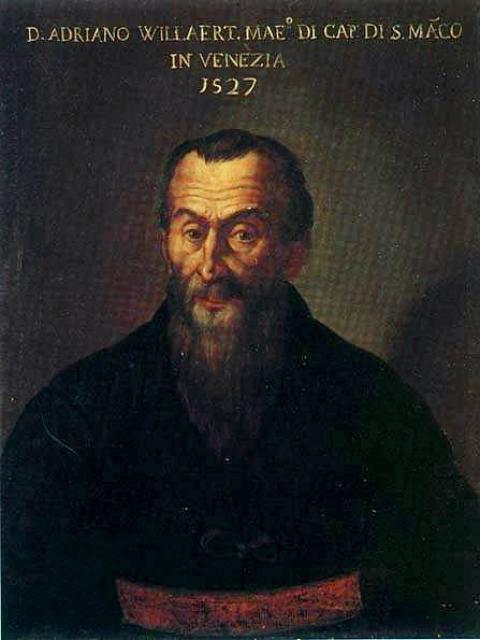
In 1527, Willaert became the Director of the Cappella Marciana of St. Mark's Cathedral in Venice. Under his leadership, the chapel became a renowned musical center, training talented composers such as Andrea Gabrieli, Gioseffo Zarlino, and possibly Cipriano de Rore and Nicola Vicentino.
Musical Legacy
Willaert's prolific output spans spiritual and secular music. His sacred works include masses, motets, hymns, and multi-voice psalms. He also composed Italian villanellas and madrigals, French chansons, and ricercars.
Experimental Motets
Willaert's influential motets (totaling 175) are predominantly composed for four to six voices. Notable early motets like "Christi virgo," "Saluto te sancta virgo," and "Magnum hereditatis mysterium" showcase his experimentation with counterpoint, harmony, musical declamation, and rhythm.
Quid ebrietas non dissignat
Willaert's enigmatic motet "Quid ebrietas non dissignat" employs a humorous text by Horace. It notably progresses through keys around the circle of fifths, teaching musicians to sing in pure intonation.
Later Masterpieces
Willaert's late motets, published in his "Musica Nova" (1559), represent the pinnacle of his artistry. These large-scale compositions demonstrate his virtuosic polyphonic technique.
Madrigals
Willaert's six- and seven-voice madrigals, based on texts from Petrarch's "Canzoniere," showcase his nuanced treatment of poetry. They share a musical style with his motets, featuring intricate imitation that emphasizes polyphonic texture over direct vocal clarity.




