Ernesto De Curtis
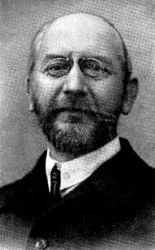
Ernesto De Curtis was an Italian composer whose melodies helped carry the sound of Naples around the world. He is best known for “Torna a Surriento,” a song written in collaboration with his elder brother, poet and painter Giambattista De Curtis. With its sweeping tune and affectionate portrait of the Sorrento coast, it became one of the most widely performed Neapolitan songs and a favorite of generations of singers.
A musical childhood in Naples
De Curtis was born in Naples on October 4, 1875, into a family with strong artistic connections. His father, Giuseppe, was a decorative painter, and his mother, Elisabetta Minnon, was a relative of composer Saverio Mercadante. Around the age of eight, Ernesto began studying piano with Vincenzo Valente, an important figure in Neapolitan song, and later studied harmony with Daniele Napolitano. He received formal piano training at Naples’ Conservatory of San Pietro a Maiella.
The city’s lively musical culture surrounded him from an early age. His older brother Giambattista was already active as a poet, painter and songwriter, and their household was connected to the circle of artists who shaped the Neapolitan song tradition. The brothers’ complementary gifts—Giambattista’s lyrics and Ernesto’s melodic sense—would become the foundation of a fruitful creative partnership.
Songs that traveled
De Curtis began attracting attention in the 1890s with songs written for Neapolitan festivals. One of his early successes was “’A primma vota.” He went on to compose music for lyrics by his brother and by other leading writers of the period, including Libero Bovio. Among the songs that won popular affection were “Amalia,” “Voce ’e notte,” “Canzone ’e Napule,” “Sona chitarra,” “Tu ca nun chiagne” and “Non ti scordar di me.”
His most enduring work, “Torna a Surriento” (“Come Back to Sorrento”), was created with words by Giambattista. The song’s history is often associated with a visit to Sorrento by Italian prime minister Giuseppe Zanardelli in 1902, though the brothers’ family papers suggest an early version may have existed years before. Whatever the precise origin, the song’s polished melody and wistful appeal made it a lasting emblem of the Neapolitan tradition. It entered the international repertoire, sung by artists from Enrico Caruso to Luciano Pavarotti and beyond.
A composer on the road
In 1902 De Curtis married Amalia Russo, to whom he dedicated the song “Amalia.” During the First World War, he organized and conducted concerts of Italian music in major American cities, helping bring Neapolitan songs to immigrant audiences and new listeners. His music also reached international stages through prominent tenors. He worked with Enrico Caruso and, from the early 1920s, traveled extensively with Beniamino Gigli, serving as the tenor’s pianist and companion on concert tours.
De Curtis spent part of his later life in the United States, but remained closely connected to Naples and continued collaborating by mail with Giambattista. In 1923, while in New York, he wrote “’A canzona ’e ll’emigrante,” also known as “Luntananza” (“Distance”), a song that gave voice to the ache of separation felt by emigrants far from home. The theme resonated with audiences who had left southern Italy for work abroad.
Legacy
Ernesto De Curtis died in Naples on December 31, 1937. His songs live on because they combine the intimacy of local speech and feeling with melodies that travel easily across languages and borders. “Torna a Surriento” has become the signature of his musical legacy, but his broader catalogue helped define the golden age of Neapolitan song. Through collaborations with his brother and with some of the era’s greatest singers, De Curtis gave the music of his city a voice heard far beyond the Bay of Naples.