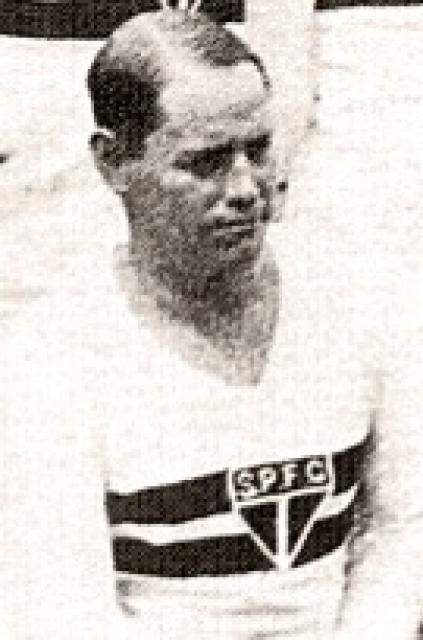
Afrodisio Xavier Camargo
 Brazil
Born in São Paulo on March 9, 1895, Afrodísio Camargo Xavier became one of the attacking figures of Brazil’s early football era. Fans knew him by the nickname Formiga, Portuguese for “ant.” He began playing in the youth ranks of Paulistano, moved to Ypiranga in 1912, and spent much of his career among São Paulo’s leading clubs, when football was still amateur and local rivalries drew huge attention.
The nickname that stuck
Formiga later recalled that the name came from his days at the Associação Atlética das Palmeiras. He would wait behind the goal during training, hoping for a place in the side and helping retrieve the ball. Since the players did not know his name, they called out “Put Formiga in” when someone was missing. The nickname followed him through his career and eventually became part of how he identified himself.
He made his mark with Ypiranga and Paulistano, where he was admired for his dribbling and attacking instincts. Paulistano won the São Paulo state championship in 1921, 1926, 1927 and 1929 during his time with the club. By the end of the decade he was part of a generation that helped define the city’s football, alongside celebrated names such as Arthur Friedenreich.
A champion for Brazil
Formiga represented Brazil in the 1919 South American Championship, though he remained a reserve and did not take the field. His international breakthrough came in 1922, when he helped Brazil win the South American title on home soil. In the decisive 3–0 match against Paraguay, he scored twice, including a late goal that sealed the result. The tournament was part of Brazil’s centenary celebrations, and the victory delivered the national team’s second continental championship.
Accounts of his international appearances vary: contemporary and later statistical records list eight matches for Brazil, while some databases count only his five appearances in the 1922 tournament. His two goals in the final are among the clearest markers of his international legacy.
Formiga’s playing career reached into the new decade. In 1930, he appeared for São Paulo FC during the club’s first season, carrying his experience into a new institution at a moment when Brazilian football was changing rapidly. He was also involved with coaching after his playing days. A 1950 retrospective described him as having played for 22 consecutive years, an unusually long career for a player of his generation.
Afrodísio Camargo Xavier died in São Paulo on July 30, 1974, aged 79. His story belongs to a formative period of Brazilian football: an era of amateur clubs, regional selection teams and international tournaments that helped turn the game into a national passion. The name supporters remembered was the one born on the training ground—Formiga.