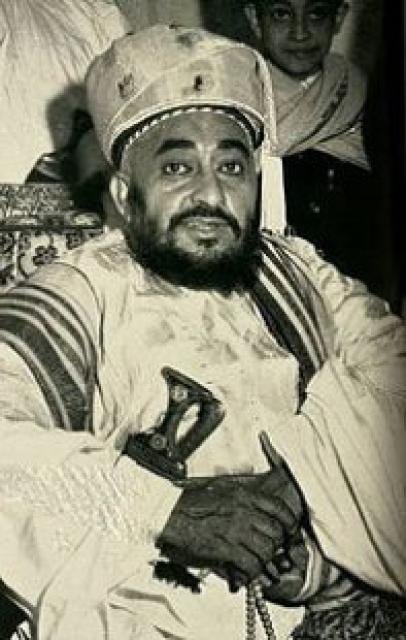
Ahmad bin Yahya
 Yemen
Yemen- Mohammed al-Badr: The Modernizing Monarch of Yemen
- Succession Struggle and Rise to Power
- A New Kingdom and Reform Efforts
- Attempted Coup in 1955 and Internal Unrest
- Foreign Policy and Alliances
- Modernization and Reforms
- Assassination and Legacy
Mohammed al-Badr: The Modernizing Monarch of Yemen
Early Life and Military EngagementsMohammed al-Badr, full name Mohammed al-Badr bin Ahmed bin Yahya, was born in 1926 in Yemen. He was the son of King Ahmed bin Yahya and a member of the Hamidaddin dynasty. As a young prince, al-Badr actively participated in the military campaigns of his father, King Yahya. However, tensions arose between father and son in the early 1940s.
Succession Struggle and Rise to Power
In 1948, a group of conspirators assassinated King Yahya. The murder triggered a rebellion that threatened to derail the succession of the official heir, Emir Ahmed. Al-Badr, with a small force of soldiers and the royal treasury, escaped from Taiz and rallied support from northern tribes. With the support of Arab monarchs and military assistance, al-Badr defeated the rebel forces and captured the capital, Sana'a, on March 14, 1948.
A New Kingdom and Reform Efforts
Upon his coronation, al-Badr established the Mutawakkilite Kingdom of Yemen, centralizing political power in Taiz. He initiated some reforms, creating an Executive Council of Ministers and improving conditions for business. He also expanded educational opportunities by sending Yemenis abroad for study. However, despite these concessions, opposition to the regime persisted.
Attempted Coup in 1955 and Internal Unrest
In 1955, a group of officers led by Ahmed as-Sulayi attempted a military coup. They demanded al-Badr's abdication in favor of his brother, Abdullah. However, al-Badr's son, Prince Muhammad al-Badr, played a crucial role in suppressing the rebellion with the support of loyal tribes. The coup leaders were executed, and Muhammad al-Badr was declared Crown Prince.
Foreign Policy and Alliances
Al-Badr maintained close ties with communist regimes, including the Soviet Union and China. He signed the Friendship Treaty with the USSR in 1955, establishing diplomatic relations. He also joined the United Arab Republic, an alliance between Egypt and Syria, in the late 1950s.
Modernization and Reforms
As Crown Prince, Muhammad al-Badr spearhead efforts to modernize Yemen. He supported the establishment of corporations and the construction of small industrial facilities. He oversaw the construction of a deep-sea port in Hodeidah and improved infrastructure with new roads, power plants, and hospitals. He also expanded educational opportunities and encouraged the publication of newspapers in Taiz.
Assassination and Legacy
Al-Badr's plans for comprehensive reforms were cut short when he was dismissed from power by his father in 1959. Opposition continued to grow, leading to armed uprisings and assassination attempts against King Ahmed. On September 18, 1962, after a prolonged illness, King Ahmed succumbed to his injuries from an assassination attempt. Muhammad al-Badr's reign was marked by his efforts to modernize Yemen and promote social and economic development. Despite the challenges and setbacks he faced, his legacy continues to influence Yemeni society to this day.