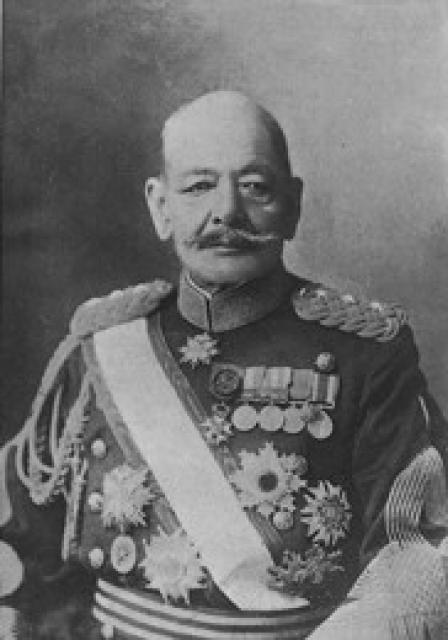
Akiyama Saneuki
 Japan
Japan- Early Life and Education
- Naval Career and Strategic Development
- Planning for the Russo-Japanese War
- Battle of Tsushima
- Post-War Influence
- Admiral and Naval Reformer
- Legacy
Early Life and Education
Sane'yuki Akiyama was born on March 1868, on the island of Shikoku. Unlike his elder brother who commanded cavalry, Sane'yuki chose a naval career and graduated from the Eta Jima Naval Academy in 1890.
Naval Career and Strategic Development
Akiyama gained valuable experience as a navigator on various ships. In 1896, he was assigned to the mine school in Yokosuka and later to the intelligence division of the Naval General Staff. Fascinated by naval history, he studied the works of Alfred T. Mahan and Stepan O. Makarov.
Recognizing his potential, Akiyama was sent to study in the United States in 1897. Although the Naval Academy at Annapolis denied him admission, Mahan recommended he pursue independent study and provided a reading list on history. As an observer during the Spanish-American War, he gained firsthand experience of naval battles.
Returning to Japan as a captain-lieutenant in 1900, Akiyama introduced the concept of "senmu," which encompassed logistics, training, and communication. He also emphasized the importance of geographical factors, weather conditions, and technological advancements.
Planning for the Russo-Japanese War
In 1903, Akiyama was appointed to the 1st Fleet and later became a member of the fleet staff aboard the flagship Mikasa, under Admiral Togo. Akiyama meticulously planned for the impending conflict with Russia. The primary objective was to neutralize or blockade the Russian fleet at Port Arthur.
Battle of Tsushima
When Vice Admiral Zinovy Rozhestvensky's squadron approached Japan, Togo entrusted Akiyama with the task of preparing battle plans. Akiyama's seven-stage plan included daylight combat, followed by nighttime torpedo attacks.
Despite unexpected Russian maneuvers, Akiyama's tactical brilliance proved instrumental. The Imperial Japanese Navy achieved a decisive victory, annihilating a significant portion of the Russian fleet.
Post-War Influence
After the war, Akiyama became a respected naval strategist. He co-authored the "Fundamentals of Naval Tactics" and advocated for a balanced fleet composed of capital ships, cruisers, and mine warfare vessels. His emphasis on spirit over matter influenced Japan's naval expansion in the 1930s.
Admiral and Naval Reformer
Promoted to rear admiral in 1913, Akiyama served as Director of the Naval Operations Department in the Navy Ministry. He tirelessly advocated for increased naval funding and modernizing the Japanese fleet. Despite economic disparities with the United States, Akiyama believed that Japan's spirit would ultimately prevail in any conflict.
Legacy
Sane'yuki Akiyama died suddenly in February 1918. His strategic insights and tactical innovations shaped Japan's naval doctrine. His impact is evident in the IJN's success during World War II and the postwar rise of the Maritime Self-Defense Force.


